

Creating a comfortable yard starts with good backyard pest management. Many struggle with flying bugs, but the right tools help a lot. Learning how to hang a bug zapper right is key to success.
Putting it in the right spot makes it work better and keeps your family safe. By using a residential pest control guide, you protect your investment. This way, you get reliable outdoor insect control all summer.
We make setting it up easy for you. We focus on safety and the best spot to hang it. This helps you enjoy your outdoor space without pests.
Key Takeaways
- Proper installation maximizes the effectiveness of your device.
- Strategic placement improves overall pest reduction in your yard.
- Safety remains the top priority during the setup process.
- Following expert guidelines ensures long-term equipment durability.
- Consistent maintenance keeps your backyard comfortable all season.
Essential Preparation and Safety Protocols
Starting a project right means having the right tools and knowing safety rules. Before you start your bug zapper installation, make sure your workspace is ready. Have all parts you need to avoid accidents and make sure your device works well all season.
Gathering Necessary Tools and Hardware
For a secure and lasting setup, use high-quality materials. When following bug zapper mounting tips, choose rust-resistant stuff like stainless steel chains or galvanized hooks. These stop corrosion, which is key for outdoor gear that faces rain and humidity.
| Hardware Type | Material | Best Use Case |
|---|---|---|
| S-Hooks | Stainless Steel | Quick attachment to chains |
| Eye Bolts | Galvanized Steel | Permanent ceiling mounts |
| Support Chains | Vinyl-Coated Steel | Adjustable height suspension |
Understanding Electrical Safety Requirements
Keeping your electric bug zapper safe means following electrical rules closely. Make sure your power source has a Ground Fault Circuit Interrupter (GFCI) to avoid shocks in wet places. Always check your power cords for frays or damage before plugging in your device.
“The foundation of any outdoor electrical project is the integrity of your power connection; never compromise on weatherproofing or grounding.”
Following outdoor electrical safety rules keeps your home safe. Keep all connections high or in a weatherproof box to stop water from getting in. This simple step greatly lowers the chance of short circuits in storms.
Assessing Your Mounting Surface
Before drilling or hanging, check if your chosen spot is strong enough. Make sure the surface can hold the weight of the unit. A safe bug zapper setup needs a solid base that won’t move or fall in strong winds.
Look for hidden wiring or plumbing behind your spot before drilling. If you’re not sure about the strength, use wall anchors or add a mounting bracket. These steps help keep your equipment steady for many years.
Choosing the Optimal Location for Maximum Coverage
Putting your insect control device in the right spot makes your outdoor time better. By picking the right spot, pests won’t bother you. Finding the best location for bug zapper is key to a great backyard.
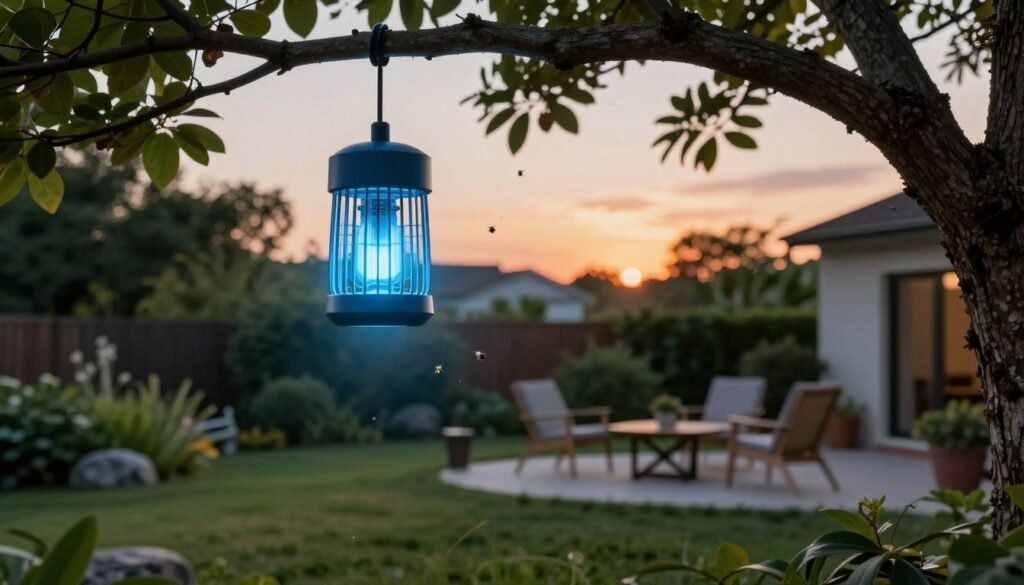
Determining the Ideal Distance from Living Areas
For the best results, put your UV light insect trap 20 feet from where you sit or eat. This keeps pests away and makes your space more comfortable. It also cuts down on mess and noise from the zapper.
Considering Light Pollution and Human Activity
Choosing the right spot for your bug zapper is tricky. It needs to attract pests but not disturb your guests. Place it in a dark corner of your yard, away from your lights.
Avoiding Proximity to Flammable Materials
Always think about safety when picking a spot. Don’t hang your device near things that can catch fire. High-voltage grids can spark when big insects get zapped. Keep the area around your device clean to avoid fires.
| Location Type | Recommended Distance | Safety Level | Effectiveness |
|---|---|---|---|
| Patio Perimeter | 20+ Feet | High | Excellent |
| Near Vegetation | 10-15 Feet | Moderate | Good |
| Near Seating | Under 5 Feet | Low | Poor |
How to hang a bug zapper effectively
Learning how to hang a bug zapper right is key to a bug-free yard. The right setup keeps your device working well and safe all season. By following a few steps, you can block flying bugs effectively.
Step 1: Installing Secure Mounting Hooks
Choosing the right bug zapper mounting tips starts with good hardware. Use rust-resistant steel hooks or heavy-duty eye bolts that can hold your model’s weight. Make sure to drill into solid wood or masonry to avoid hardware coming loose.
Step 2: Attaching the Zapper to the Support Structure
After setting up your hooks, attach the zapper with chains or brackets. Make sure it hangs perfectly level for good drainage. Check all connections are tight to stop the unit from moving or vibrating.
Step 3: Ensuring Proper Height and Clearance
Following bug zapper height requirements is crucial for best results. Hang it 6 to 8 feet off the ground. This keeps it safe from kids and pets and right in pests’ flight paths.
Adjusting for Optimal Insect Attraction
To draw in insects, place the zapper away from other lights. The UV glow should be the main light to attract bugs away from where you sit. The best spot is at the edge of your patio or deck.
Securing the Unit Against Wind and Weather
A safe bug zapper setup also means protecting it from wind. Use extra tethers if you live in windy areas. This keeps the unit stable and prevents damage during bad weather.
| Mounting Surface | Recommended Hardware | Stability Level |
|---|---|---|
| Wooden Post | Heavy-duty Eye Bolt | High |
| Brick Wall | Masonry Anchor | Very High |
| Overhead Beam | Steel S-Hook | Moderate |
Electrical Setup and Power Management
Setting up a safe power connection is key for outdoor pest control. It’s important to manage power well, especially in wet or humid places. By following certain rules, your device will work well all summer.
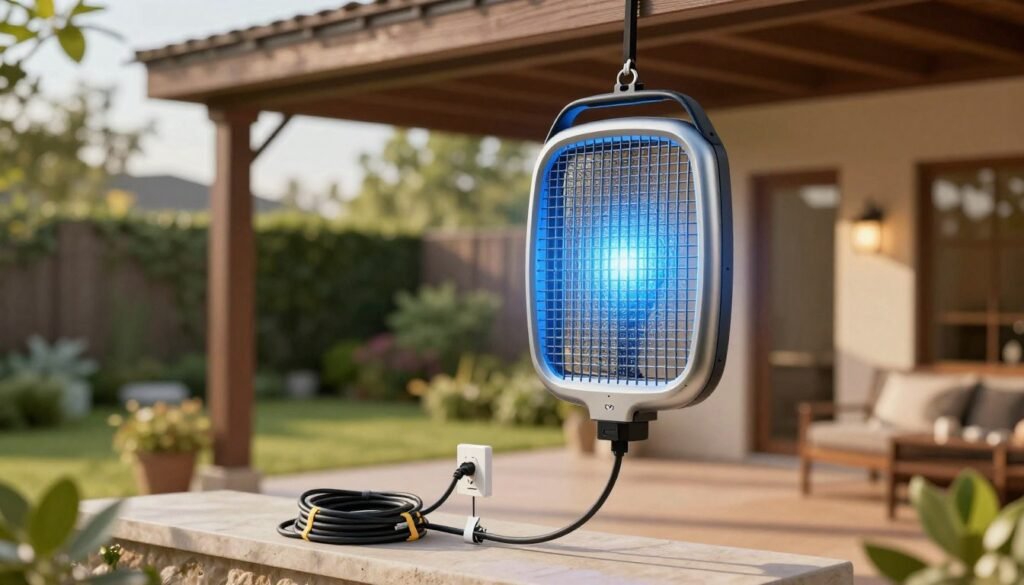
Selecting the Right Outdoor-Rated Extension Cords
When powering your device, choose the right equipment for outdoor electrical safety. Use a UL-listed, outdoor-rated extension cord that can handle moisture and temperature changes. An indoor cord outside is a big risk of short circuits and fires.
For bug zapper extension cord safety, pick a cord that fits the distance you need. A thicker cord keeps the voltage steady and the zapper working well. Never connect multiple cords together, as it can cause connection problems.
Managing Cable Routing to Prevent Tripping Hazards
With the right cord, manage the cable to keep your yard safe. Don’t run cords across walkways or patio areas where people might trip. If you must cross a path, use a heavy-duty cord cover or cable ramp to keep the wire down.
Run the cord along your deck or fence line to keep it out of the way. Securing the cable with insulated clips prevents it from sagging or getting caught. This keeps your outdoor space tidy and reduces the chance of accidental disconnection.
Utilizing Weatherproof Outlet Covers
Protecting outdoor electronics from the weather is crucial. Always plug your extension cord into a GFCI-protected outlet to avoid electrical shocks. Weatherproof outlet covers keep rain or spray away from live electrical parts.
These covers are a critical barrier against the elements, keeping your connections dry and safe. If your outdoor outlet lacks a cover, consider installing a bubble-style enclosure for bulky plugs. This is an important investment for your equipment’s life and your family’s safety.
| Feature | Indoor Cord | Outdoor-Rated Cord |
|---|---|---|
| Weather Resistance | Low | High |
| Insulation Thickness | Thin | Heavy-Duty |
| Safety Rating | None | UL-Listed |
| Primary Use | Dry Indoors | Wet/Outdoor |
Maintenance and Seasonal Care
Proper care for your insect control unit keeps it working well all season. Regular bug zapper maintenance helps it run efficiently and prevents mechanical issues.
Cleaning the Grid and Collection Tray
Debris and insect remains can build up inside your UV light insect trap. If not cleaned, it can cause short circuits or lower effectiveness.
Here’s how to clean bug zapper grids safely:
- Always disconnect the power supply before touching the unit.
- Use a soft-bristled brush to gently remove debris from the electrified grid.
- Empty the collection tray regularly to prevent organic matter from piling up.
- Wipe down the exterior housing with a damp cloth to maintain a clean appearance.
Replacing UV Bulbs for Continued Performance
The light intensity of your device is crucial for its effectiveness. Even if the bulb still glows, its UV output weakens over time.
Replacing the bug zapper bulb on time keeps your device attracting insects well. Check the manufacturer’s guidelines for bulb lifespan. Most bulbs need a replacement every 4,000 to 8,000 hours.
Storing Your Device During Off-Season Months
When it gets colder and insects are less active, proper seasonal bug zapper care is key. Storing your unit right prevents damage from moisture, dust, and cold during winter.
Before storing, make sure your device is dry and clean. Store it in a cool, dry place like a garage or shed. Cover it to keep dust off until next season.
Read More: How to Fix a Thin Lawn
Conclusion
Effective insect control comes from consistent habits and the right equipment placement. By following these steps, you make your home more comfortable for everyone.
This guide has given you the tools to manage your device well. You now know how to use it effectively.
Good backyard pest management is more than just setting up once. It’s about caring for your equipment all year and checking it often. Your hard work keeps your equipment working well against bugs all summer.
Check your setup today. Even small changes can make a big difference. Enjoy your outdoor space without worry.
FAQ
Where is the most effective location to install my device for backyard pest management?
Place your bug zapper at least 20 feet away from where people hang out. This keeps pests away from your living area. Also, avoid areas with lots of streetlights or porch lamps. These can make the zapper less effective.
What are the recommended bug zapper height requirements for the best results?
Hang your bug zapper at 6 to 8 feet high. This is where most flying insects fly. It’s also safe for kids and pets, and catches the most pests.
What safety protocols should I follow regarding electrical safety standards?
Always use UL-listed, outdoor-rated extension cords. Keep the connection dry with weatherproof outlet covers. These steps are key to keeping your bug zapper safe and working well.
Which tools and hardware are necessary for a secure mounting process?
Use rust-resistant hooks and heavy-duty chains for stability. Make sure the surface can hold the weight of the zapper. This prevents damage and keeps it working right.
How often does the unit require bug zapper maintenance and bulb replacement?
Clean the grids and empty the tray often to avoid debris. Change the UV lamps every season. Even if the bulb looks good, its UV output weakens over time.
What should I do for seasonal bug zapper care once the summer ends?
After summer, disconnect the power and clean the zapper well. Store it in a dry place like a garage. This keeps it ready for next year.
Are there any specific areas I should avoid when choosing a location?
Stay away from flammable stuff like dry leaves or fuel tanks. Don’t hang it over dining areas to avoid mess. These tips help keep your family safe and your yard pest-free.

About Ravuk Barg
B.Sc. Horticulture Science | Certified Master Gardener
Ravuk Barg has spent more than a decade with his hands in the soil and his head full of questions about why some gardens thrive while others struggle. What started as a single raised bed of tomatoes and basil in a modest backyard has grown into a deep, working knowledge of everything from seed germination and soil amendment to companion planting and seasonal pruning.
Over the years, Ravuk has gardened through drought summers, waterlogged springs, and pest invasions that would make most gardeners hang up their trowels for good. Those hard seasons, he’ll tell you, taught him more than any perfect growing year ever could. He writes from that earned experience—covering vegetable growing, ornamental planting, houseplant care, composting, and garden design with equal confidence and curiosity.
Philosophy & Approach
Ravuk’s approach to gardening is rooted in practicality. He favors organic methods not out of dogma, but because they work long-term—resulting in healthier soil, fewer inputs, and stronger plants. He has a particular fondness for heirloom vegetable varieties (the kind with proper flavor), unruly cottage-style flower beds, and the stubborn houseplants that everyone else gave up on.
The Mission: Give readers the honest, experience-backed advice that helps them actually succeed in their gardens—not just the ideal version, but the real one; weeds, failures, and all.
Education & Credentials
-
B.Sc. in Horticulture Science
-
Greenfield Agricultural University
-
Focus: Plant Physiology, Soil Ecology, and Sustainable Crop Production
-
-
Master Gardener Certification
-
Cooperative Extension Service
-
Focus: 200+ hours of hands-on practical training and community garden work
-
Continuing Education
-
Organic Pest Management
-
Native Plant Landscaping
-
Sustainable Crop Production