

Waking up to find your once-pristine lawn riddled with small, cone-shaped holes can be incredibly frustrating. More often than not, the culprit behind this nightly destruction is a skunk. These animals, while generally harmless, are persistent foragers that can turn a beautiful yard into a patchy mess in their search for food.

Understanding their behavior is the first step toward reclaiming your green space. This guide provides a comprehensive look at how to stop skunks from digging up lawn, offering practical, beginner-friendly methods to protect your yard and encourage these nocturnal visitors to find their dinner elsewhere without resorting to harmful tactics.
Why Skunks Dig Up Lawns
Before you can effectively deter skunks, it helps to understand why they are attracted to your lawn in the first place. Skunks are omnivores with a powerful sense of smell, and your yard is a potential buffet. Their primary food sources are insects and their larvae, particularly grubs. Grubs, the larval stage of various beetles like Japanese beetles and June bugs, live just below the soil’s surface, feeding on grassroots.
A healthy lawn can unfortunately host a large grub population, making it an irresistible target for a hungry skunk. When a skunk detects these tasty morsels, it uses its long front claws to dig shallow, cone-shaped holes to extract them. This digging activity is most common in the late summer and fall when grubs are mature and closer to the surface.
8 Step Methods Guide on How to Stop Skunks from Digging Up Lawn
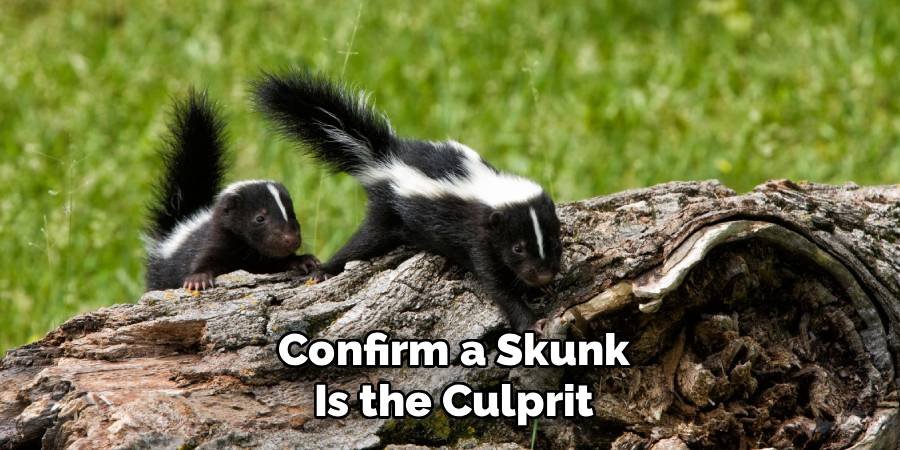
Step 1: Confirm a Skunk Is the Culprit
The first step is to correctly identify the animal causing the damage. Skunk-made holes are typically shallow, about 3-4 inches deep, and shaped like a small cone. You might notice that the sod is rolled back neatly, almost like a little flap. This is distinct from the damage caused by raccoons, who are messier and tend to rip up larger patches of turf. Other signs of skunk activity include faint, musky odors in the early morning or late evening. Using a trail camera at night can provide definitive proof and help you confirm you are dealing with a skunk before you start applying solutions.
Step 2: Eliminate Their Food Source by Managing Grubs
The most effective long-term solution is to remove what attracts them: grubs. By managing the grub population in your lawn, you make it a far less appealing place for skunks to forage. You can apply beneficial nematodes, which are microscopic worms that prey on grubs but are harmless to people, pets, and plants. These are best applied in the late summer or early fall when grubs are active. Another option is milky spore, a naturally occurring disease that targets Japanese beetle grubs. Reducing their food supply sends a clear message to skunks that your lawn is no longer a reliable restaurant.
Step 3: Use Scent Deterrents Around Your Yard
Skunks have sensitive noses, which you can use to your advantage. Several strong scents are known to repel them. Spreading citrus peels like orange, lemon, or grapefruit around the perimeter of your lawn can be an effective deterrent. Another option is to use predator urine, such as coyote or fox urine, which can be purchased from garden centers or online. This tricks skunks into thinking a predator is nearby, making them feel unsafe. You can also try ammonia-soaked rags placed in shallow dishes around the yard, but be sure to keep them out of reach of pets and children. Reapply these scents regularly, especially after rain.

Step 4: Install Motion-Activated Sprinklers
A sudden spray of water is an excellent and harmless way to startle a skunk and scare it away. Motion-activated sprinklers detect movement and release a short, surprising burst of water. Position these devices to cover the areas where you have seen the most digging. When a skunk approaches, the unexpected spray will send it running. Over time, the skunk will learn to associate your lawn with this unpleasant experience and will likely avoid it altogether. This method is environmentally friendly and also effective against other unwanted animal visitors like raccoons and cats.
Step 5: Utilize Light and Sound to Create Discomfort
Skunks are nocturnal and prefer to operate under the cover of darkness. Introducing light and sound can disrupt their comfort and make your yard a less inviting place. Motion-activated floodlights can startle a skunk when it enters a protected zone. Similarly, leaving a radio on overnight near the affected area can create an unsettling environment for a creature that relies on quiet. Set the radio to a talk station, as the sound of human voices can be particularly effective. These tactics disrupt the peaceful setting skunks seek for their nightly foraging.

Step 6: Apply Skunk Repellent Granules
Commercial skunk repellents offer another layer of defense. These products typically come in granular form and are made from natural ingredients that produce odors skunks find offensive, such as castor oil or certain peppers. The granules are easy to spread across your entire lawn or around specific problem areas using a broadcast spreader. They work by making the ground smell and taste bad to the skunk. Always follow the manufacturer’s instructions for application and reapplication, which is usually necessary after heavy rainfall or every few weeks to maintain effectiveness.
Step 7: A Step on How to Stop Skunks from Digging Up Lawn by Securing Your Property
Beyond their search for grubs, skunks may be drawn to your property by other easily accessible food sources. Ensure your garbage cans are tightly sealed; a bungee cord can help keep lids secure. If you have pets, do not leave pet food outside overnight, as this is a powerful attractant. Clean up fallen fruit from trees and secure your compost bin. By removing these additional temptations, you make your property less of a one-stop-shop for a hungry skunk, encouraging it to look for food, water, and shelter in a less-maintained area.
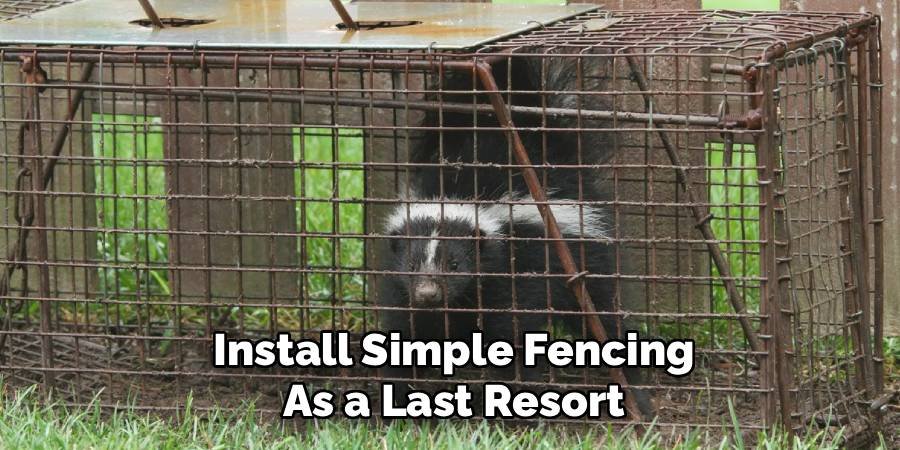
Step 8: Install Simple Fencing as a Last Resort
If deterrents are not enough, a physical barrier may be necessary. For a determined skunk, especially one trying to create a den under a porch or shed, fencing can be the ultimate solution. Skunks are not great climbers, but they are excellent diggers. To be effective, a fence should be at least two feet high and buried about one foot deep. Bending the bottom of the fence outward in an “L” shape will prevent the skunk from digging underneath it. This is a more labor-intensive solution but provides a permanent barrier to keep them out of specific areas.
Common Mistakes to Avoid
When dealing with skunk prevention, certain mistakes can undermine your efforts and make the problem persist. One common error is failing to address all potential entry points. Skunks are opportunistic and will exploit even the smallest gaps under porches, decks, or sheds. Another mistake is not taking early action; allowing skunks to establish a den will make removal much more challenging. Additionally, relying solely on repellents without implementing lasting physical barriers often proves ineffective. Lastly, improper waste management, such as leaving out trash or pet food, can attract skunks to your property. Avoiding these missteps will significantly improve your chances of success in keeping skunks at bay.
Frequently Asked Questions
Will Getting Rid of Grubs Guarantee Skunks Stay Away?
Getting rid of grubs will significantly reduce your lawn’s appeal, but it’s not an absolute guarantee. While grubs are a primary food source, skunks also eat other insects, earthworms, small rodents, and even berries or fallen fruit. However, a grub-free lawn is a major deterrent. Combining grub control with other methods, like scent repellents or motion-activated sprinklers, will give you the best chance of keeping skunks away for good. It’s about making your yard as uninviting as possible.
Are Skunk Repellents Safe for My Pets and Children?
Most commercially available skunk repellents that use natural ingredients like castor oil or essential oils are generally safe for pets and children when used according to the product’s directions. However, it is always wise to read the label carefully before application. Some homemade remedies, such as those using cayenne pepper, can irritate a pet’s nose or paws. When using any repellent, monitor your pets to ensure they do not have a negative reaction.
What Time of Day Are Skunks Most Active?
Skunks are primarily nocturnal, meaning they are most active at night. They typically emerge from their dens around dusk to begin foraging for food and remain active until just before dawn. This is why most homeowners discover lawn damage in the morning. Understanding their schedule helps you time your deterrent efforts. For instance, turning on motion-activated devices or a radio before sunset ensures they are ready for any nighttime visitors.
Will Patching the Holes in My Lawn Stop the Skunks?
Simply patching the holes will not stop skunks from returning. The holes are a symptom of the problem, which is the food source (grubs) beneath your turf. If you fill the holes without addressing the grubs, the skunks will just dig new ones nearby. Your best course of action is to treat the grub problem first. Once you are confident the skunks have moved on, you can repair the lawn by filling the holes with topsoil and reseeding the patches.
Should I Trap and Relocate a Skunk Myself?
Trapping and relocating a skunk is not recommended for homeowners. It is often illegal to relocate wildlife without a permit, as it can spread disease and create problems in other areas. Furthermore, live-trapping a skunk is risky; if you frighten it, you are very likely to get sprayed. It is much safer and more effective to hire a licensed wildlife control professional who is equipped to handle and remove the animal humanely and legally.
Conclusion
Discovering skunk damage on your lawn is disheartening, but it’s a solvable problem. By understanding their motivations and systematically applying different strategies, you can protect your turf. Start by confirming a skunk is the culprit, then focus on removing their primary food source—grubs. Enhance your efforts with scent deterrents, motion-activated devices, and by securing other potential food sources like trash and pet food. These humane and effective methods will encourage skunks to find their meals elsewhere. With a little persistence, you now know how to stop skunks from digging up lawn and can once again enjoy a healthy, hole-free yard.

About Ravuk Barg
B.Sc. Horticulture Science | Certified Master Gardener
Ravuk Barg has spent more than a decade with his hands in the soil and his head full of questions about why some gardens thrive while others struggle. What started as a single raised bed of tomatoes and basil in a modest backyard has grown into a deep, working knowledge of everything from seed germination and soil amendment to companion planting and seasonal pruning.
Over the years, Ravuk has gardened through drought summers, waterlogged springs, and pest invasions that would make most gardeners hang up their trowels for good. Those hard seasons, he’ll tell you, taught him more than any perfect growing year ever could. He writes from that earned experience—covering vegetable growing, ornamental planting, houseplant care, composting, and garden design with equal confidence and curiosity.
Philosophy & Approach
Ravuk’s approach to gardening is rooted in practicality. He favors organic methods not out of dogma, but because they work long-term—resulting in healthier soil, fewer inputs, and stronger plants. He has a particular fondness for heirloom vegetable varieties (the kind with proper flavor), unruly cottage-style flower beds, and the stubborn houseplants that everyone else gave up on.
The Mission: Give readers the honest, experience-backed advice that helps them actually succeed in their gardens—not just the ideal version, but the real one; weeds, failures, and all.
Education & Credentials
-
B.Sc. in Horticulture Science
-
Greenfield Agricultural University
-
Focus: Plant Physiology, Soil Ecology, and Sustainable Crop Production
-
-
Master Gardener Certification
-
Cooperative Extension Service
-
Focus: 200+ hours of hands-on practical training and community garden work
-
Continuing Education
-
Organic Pest Management
-
Native Plant Landscaping
-
Sustainable Crop Production