

Discovering tall, hairy-stemmed weeds towering over your grass can be frustrating for any homeowner. If you’ve spotted these invaders, you’re likely dealing with horseweed, also known as marestail. This aggressive annual weed can quickly take over a lawn, growing up to six feet tall and producing an astonishing number of seeds.
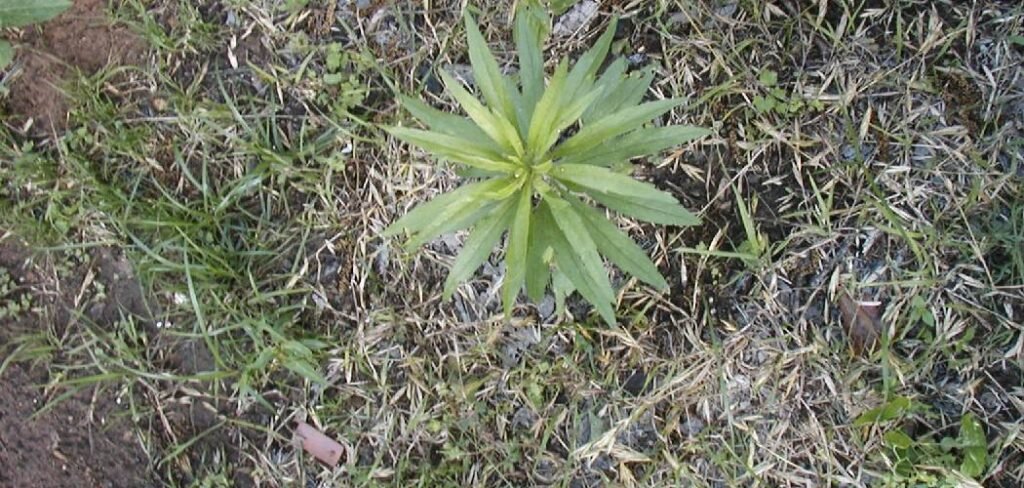
Its deep taproot makes it a formidable opponent. But don’t worry—with the right approach, you can reclaim your turf. This guide provides a clear, beginner-friendly plan on how to get rid of horseweed in lawn, helping you restore your yard to its lush, green state. We’ll walk through every step, from identification to prevention.
Why Controlling Horseweed Matters
Horseweed (Conyza canadensis) isn’t just an eyesore; it’s a highly competitive plant that poses a real threat to your lawn’s health. It aggressively competes with your desirable turfgrass for essential resources like water, sunlight, and nutrients. Because it can grow so tall, so quickly, it easily shades out the grass below, weakening it and creating bare patches. Furthermore, a single horseweed plant can produce over 200,000 seeds, which are easily spread by the wind, leading to a widespread infestation in a short amount of time. Addressing a horseweed problem promptly is crucial to prevent it from becoming a larger, more difficult issue that compromises the overall health and appearance of your entire lawn.
7 Step-by-Step Guide on How to Get Rid of Horseweed in Lawn
Tackling a horseweed invasion requires a systematic approach. The following steps will guide you through the process, from initial identification to long-term prevention, ensuring you can effectively clear your yard of this persistent weed.
Step 1: Positively Identify the Horseweed
Before you begin any treatment, it’s crucial to confirm you’re dealing with horseweed. In its early stages, it forms a small, low-growing rosette of leaves that can be mistaken for other common weeds. As it matures, it bolts upward, forming a single, hairy stem that can reach several feet in height.
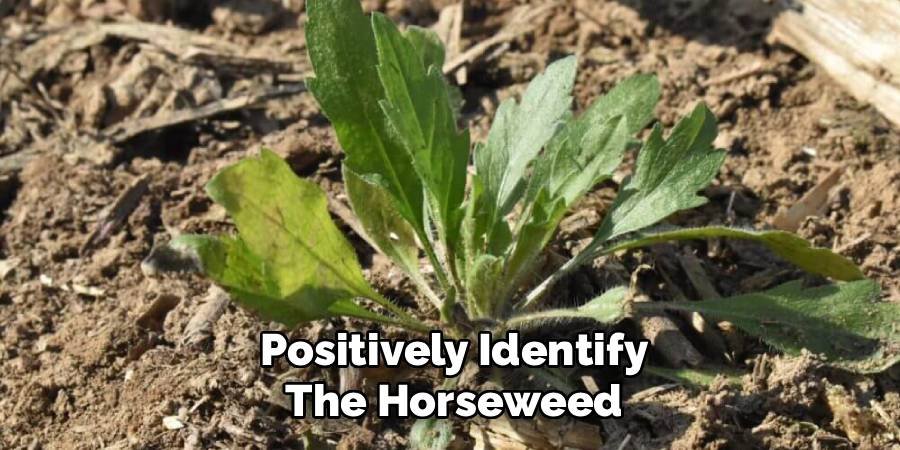
The leaves are long, narrow, and arranged alternately along the stem. The upper leaves are typically smaller than the lower ones. Misidentification can lead to using ineffective control methods, so take the time to compare the weeds in your lawn to pictures of horseweed at various growth stages.
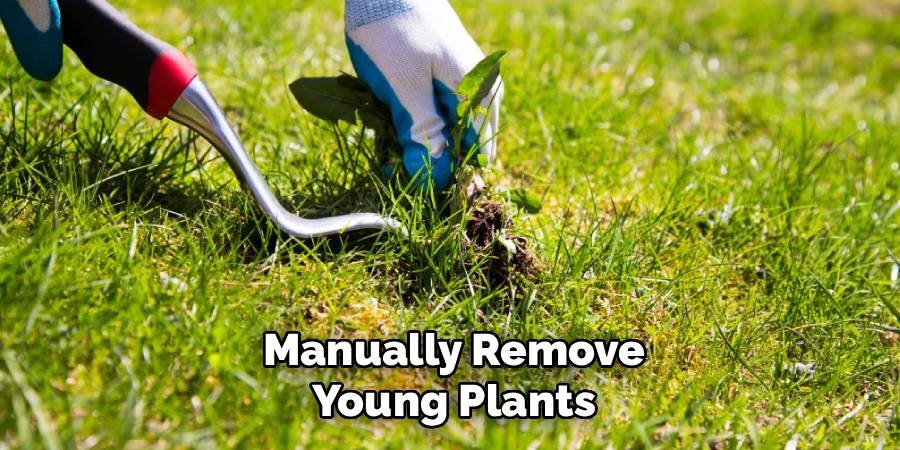
Step 2: Manually Remove Young Plants
For small infestations or young plants, hand-pulling is a surprisingly effective method. The best time to do this is after a recent rainfall when the soil is moist and soft, which makes it easier to extract the entire taproot. Grasp the weed firmly at the base of the stem and pull with a steady, upward motion. It’s critical to remove the entire root system; any fragment left behind can potentially regrow. For more established plants with deeper roots, use a dandelion weeder or a garden fork to loosen the surrounding soil before pulling.
Step 3: Choose the Right Post-Emergent Herbicide
When manual removal isn’t practical for a larger infestation, a selective post-emergent herbicide is your next line of defense. It’s important to choose a product specifically labeled for controlling horseweed in residential lawns. Look for herbicides containing active ingredients like 2,4-D, dicamba, or MCPP. These chemicals are designed to target broadleaf weeds like horseweed without harming your desirable turfgrass. Always read and follow the product label’s instructions for application rates, safety precautions, and the best time to apply for maximum effectiveness, which is typically when the weed is young and actively growing.
Step 4: Apply Herbicides Correctly and Safely
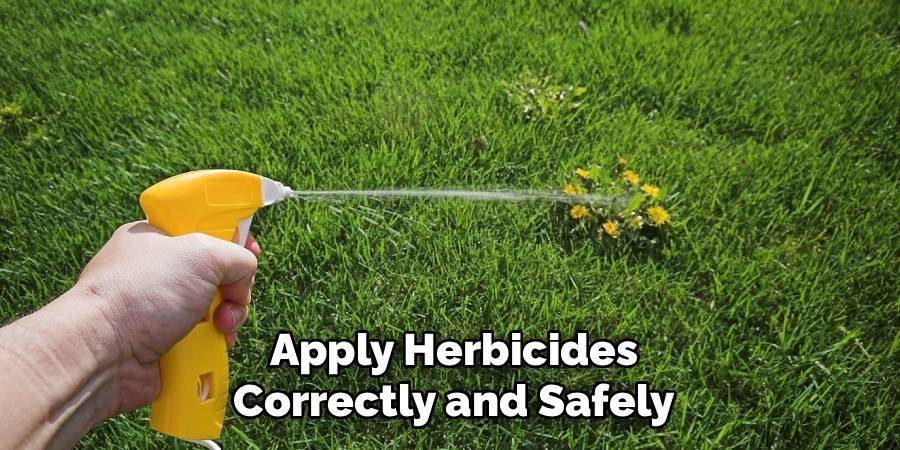
Proper application is key to an herbicide’s success. Apply the treatment on a calm, dry day with minimal wind to prevent the spray from drifting onto desirable plants in your garden. Avoid applying just before rain is expected, as this can wash the product away before it has a chance to be absorbed by the weed’s leaves. For the best results, treat horseweed when it is still in the smaller rosette stage, as mature plants often develop resistance. Use a sprayer to evenly coat the leaves of the weed until they are wet but not dripping.
Step 5: Consider a Pre-Emergent Herbicide for Prevention
After you have controlled the existing weeds, the next step is prevention. Applying a pre-emergent herbicide in the late fall or early spring can stop horseweed seeds from germinating in the first place. These products create a chemical barrier in the top layer of the soil that inhibits weed seed sprouting. Look for pre-emergents containing ingredients like isoxaben or dithiopyr. Timing is critical for success; you must apply it before the seeds begin to sprout. This preventative measure is a cornerstone of learning how to get rid of horseweed in lawn for the long term.
Step 6: Improve Your Lawn’s Health to Crowd Out Weeds
A thick, healthy lawn is the best natural defense against any weed, including horseweed. Dense turfgrass leaves little room for weed seeds to germinate and establish themselves. You can promote a healthier lawn by mowing at the correct height for your grass type, which helps shade the soil and prevent weed growth. Implement a regular fertilization schedule to provide your grass with the nutrients it needs to thrive. Deep, infrequent watering encourages strong root development, making your lawn more resilient and better able to outcompete invasive weeds.
Step 7: Overseed Bare Patches in the Lawn
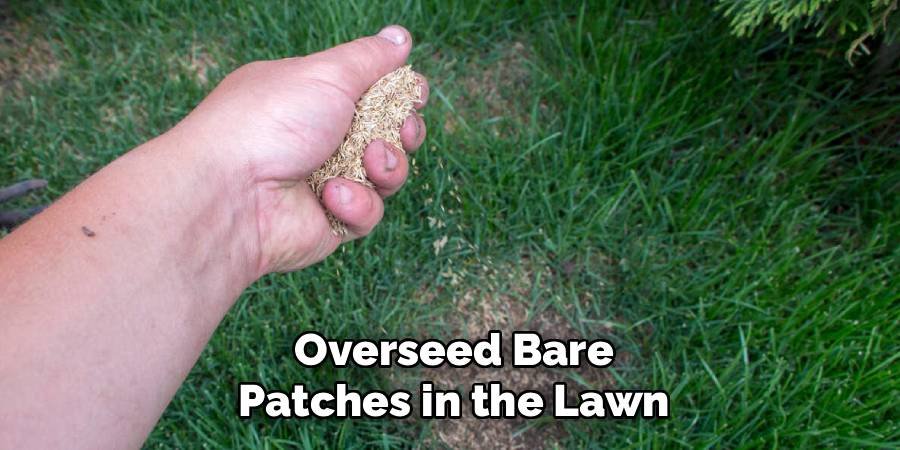
Any bare or thin spots left behind after removing horseweed are prime real estate for new weeds to sprout. It is essential to fill these areas with desirable grass. Overseeding, the process of spreading grass seed over your existing lawn, is the perfect solution. Rake the bare areas to loosen the soil, then apply a high-quality grass seed that matches your current lawn type. Keep the newly seeded areas consistently moist until the new grass is well-established. A dense, uniform lawn is a powerful deterrent against future horseweed infestations.
Frequently Asked Questions (FAQ)
What Is the Best Time of Year to Treat for Horseweed?
The best time to treat horseweed is when the plants are young and in the rosette stage, which typically occurs in the fall or early spring. At this size, they are more susceptible to both manual removal and post-emergent herbicides. Applying herbicides during these cooler seasons when the weed is actively growing ensures better absorption and effectiveness. Attempting to control large, mature plants in the summer is much more difficult.
Can I Just Mow Over Horseweed to Get Rid of It?
Mowing is not an effective long-term solution for controlling horseweed. While cutting the weed will temporarily improve your lawn’s appearance, the plant will quickly regrow from its root system. Mowing can also stress the plant, sometimes triggering it to produce seeds at a shorter height. For effective control, you must either remove the entire plant, including the taproot, or use a systemic herbicide that kills the plant down to the root.
Are There Any Natural Ways to Kill Horseweed?
Yes, there are natural methods. Hand-pulling is the most direct and organic approach, especially for smaller infestations. Another strategy involves using horticultural vinegar (with a high acetic acid concentration) as a spot treatment. Be aware that this will kill any plant it touches, including your grass, so apply it carefully. The most effective natural strategy, however, is promoting a dense and healthy lawn through proper mowing, watering, and fertilization, as this creates an environment where weeds struggle to compete.
How Long Does It Take for Herbicides to Kill Horseweed?
The time it takes for an herbicide to kill horseweed can vary based on the product, the size of the plant, and weather conditions. Generally, you should start to see the weed yellowing or wilting within 7 to 14 days of applying a post-emergent herbicide. It may take up to three weeks for the plant to die completely. For the treatment to be successful, the herbicide must be absorbed and translocated throughout the plant, including the deep taproot.
Why Does Horseweed Keep Coming Back in My Lawn?
Horseweed is persistent for several reasons. Each plant produces a massive number of seeds that are easily spread by wind, ensuring a constant new supply. These seeds can remain dormant in the soil for years, waiting for the right conditions to germinate. Additionally, horseweed has developed resistance to some common herbicides, making control more challenging. A recurring problem often indicates that underlying issues, like thin turf or bare soil, are providing an ideal environment for the weed to thrive.
Conclusion
Controlling horseweed requires patience and a multi-faceted strategy. By correctly identifying the weed, acting quickly to remove young plants, and using the appropriate herbicides when necessary, you can effectively manage an infestation. Remember that the ultimate goal is to create a lawn that is too healthy and dense for weeds to gain a foothold. By following the guidance on how to get rid of horseweed in lawn, you are not just fighting a weed; you are investing in the long-term health and beauty of your entire yard. With consistent effort, you can enjoy a lush, horseweed-free lawn.

About Ravuk Barg
B.Sc. Horticulture Science | Certified Master Gardener
Ravuk Barg has spent more than a decade with his hands in the soil and his head full of questions about why some gardens thrive while others struggle. What started as a single raised bed of tomatoes and basil in a modest backyard has grown into a deep, working knowledge of everything from seed germination and soil amendment to companion planting and seasonal pruning.
Over the years, Ravuk has gardened through drought summers, waterlogged springs, and pest invasions that would make most gardeners hang up their trowels for good. Those hard seasons, he’ll tell you, taught him more than any perfect growing year ever could. He writes from that earned experience—covering vegetable growing, ornamental planting, houseplant care, composting, and garden design with equal confidence and curiosity.
Philosophy & Approach
Ravuk’s approach to gardening is rooted in practicality. He favors organic methods not out of dogma, but because they work long-term—resulting in healthier soil, fewer inputs, and stronger plants. He has a particular fondness for heirloom vegetable varieties (the kind with proper flavor), unruly cottage-style flower beds, and the stubborn houseplants that everyone else gave up on.
The Mission: Give readers the honest, experience-backed advice that helps them actually succeed in their gardens—not just the ideal version, but the real one; weeds, failures, and all.
Education & Credentials
-
B.Sc. in Horticulture Science
-
Greenfield Agricultural University
-
Focus: Plant Physiology, Soil Ecology, and Sustainable Crop Production
-
-
Master Gardener Certification
-
Cooperative Extension Service
-
Focus: 200+ hours of hands-on practical training and community garden work
-
Continuing Education
-
Organic Pest Management
-
Native Plant Landscaping
-
Sustainable Crop Production