

Clay soil presents unique challenges for tree care, but learning how to deep water a tree in clay soil can transform your landscape. Dense clay particles compact easily and drain slowly, making it difficult for water to penetrate deeply where tree roots need it most.
Surface watering often leads to runoff and shallow root development, leaving trees vulnerable to drought stress. Deep watering techniques help water reach the root zone effectively, promoting healthy growth even in challenging soil conditions.
When done correctly, deep watering encourages trees to develop strong, deep root systems that can access moisture and nutrients throughout the soil profile. This method also prevents the waterlogged surface conditions that can lead to root rot and other moisture-related problems.
Why You Need to Deep Water a Tree in Clay Soil
Clay soil presents unique challenges for tree growth due to its dense, compact structure and poor drainage capabilities. When watered improperly, clay soil can easily become waterlogged, depriving tree roots of oxygen and increasing the risk of root diseases. On the other hand, insufficient watering can cause the soil to harden, making it difficult for roots to penetrate and access vital nutrients. Deep watering ensures moisture is delivered directly to the root zone, allowing trees to thrive even in such challenging conditions. This practice not only helps trees establish robust root systems but also supports their long-term health and resilience against environmental stressors.
8 Step-by-Step Guide on How to Deep Water a Tree in Clay Soil
Step 1: Assess Your Clay Soil Type and Tree Needs
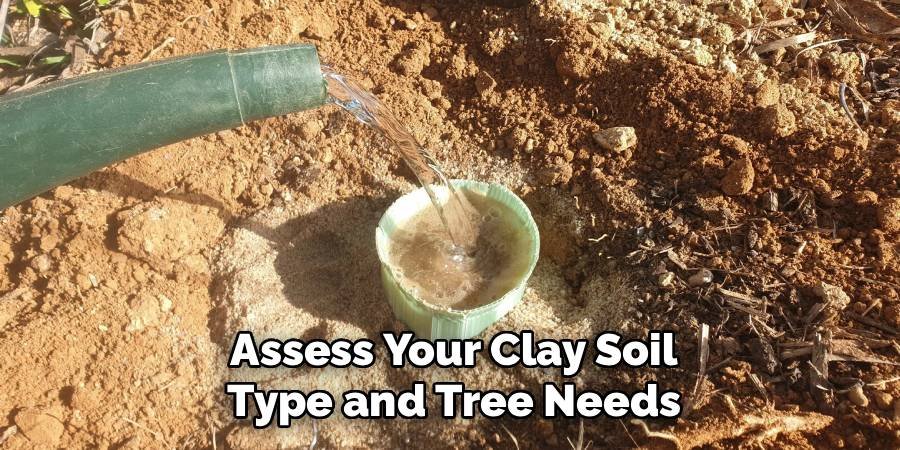
Before beginning any watering routine, examine your clay soil’s density and drainage characteristics. Dig a small hole near your tree to observe how quickly water absorbs into the ground. Heavy clay soils may take hours or even days to absorb water completely, while lighter clay-loam mixtures drain more readily.
Different tree species have varying water requirements, so research your specific tree type. Young trees typically need more frequent watering than established ones, but the deep watering principle remains constant. Consider factors like tree size, age, and seasonal growth patterns when planning your watering schedule.
Test the soil moisture at different depths using a long screwdriver or soil probe. Clay soil can appear dry on the surface while remaining saturated underneath, leading to overwatering if you’re not careful.
Step 2: Create a Watering Basin Around the Tree
Build a shallow basin or berm around your tree extending to the drip line, which is where the outermost branches end. This circular depression should be 2-3 inches deep and help direct water toward the root zone rather than allowing runoff.
The basin walls should be gently sloped to prevent erosion while containing water effectively. For mature trees, create multiple basins at different distances from the trunk to ensure water reaches both shallow feeder roots and deeper structural roots.
Remove any grass or weeds within the basin area, as these compete with your tree for water and nutrients. The clear basin also makes it easier to monitor water penetration and adjust your technique as needed. This focused watering area maximizes efficiency in clay soil conditions.
Step 3: Install Deep Watering Tools
Deep root watering tools help deliver water directly to the root zone, bypassing the slow surface penetration typical of clay soils. Root feeders, soaker hoses, or deep watering spikes can be inserted into the soil around the tree’s drip line.
Space these tools evenly around the tree, typically 2-3 feet apart for even water distribution. Deep watering spikes should penetrate 8-12 inches into the soil, while soaker hoses can be laid in concentric circles around the tree base.
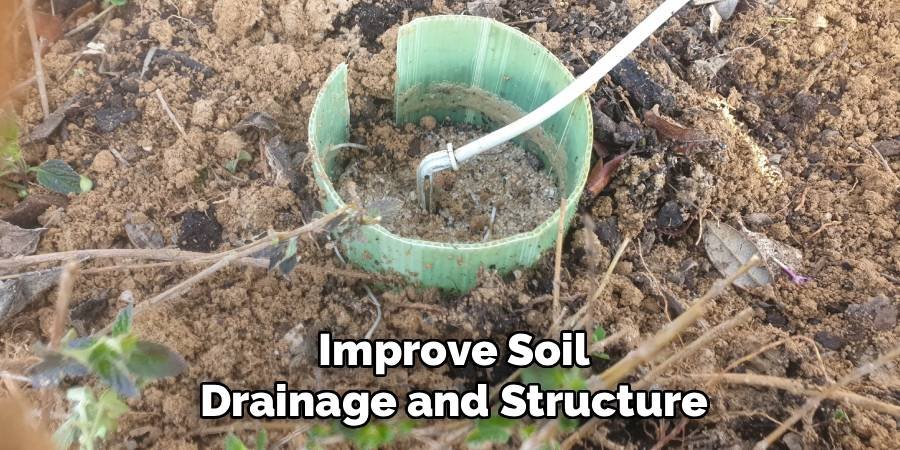
For a budget-friendly option, create your own deep watering system using a large container with small holes drilled near the bottom. Bury this container partially in the soil near the tree, allowing for slow, deep water release directly into the root zone.
Step 4: Improve Soil Drainage and Structure
Amend your clay soil with organic matter to improve its structure and drainage capabilities. Work compost, aged manure, or leaf mold into the top 6-8 inches of soil around the tree, extending beyond the drip line.
These organic amendments create air pockets in dense clay, allowing water and oxygen to penetrate more easily. They also provide beneficial microorganisms that help break down clay particles and improve overall soil health.
Avoid adding sand to clay soil, as this can create a concrete-like mixture that’s even harder for water to penetrate. Instead, focus on organic materials that will decompose over time and continuously improve soil structure while providing nutrients for your tree.
Step 5: Apply Mulch for Moisture Retention
Spread a 3-4 inch layer of organic mulch around the tree, keeping it 6 inches away from the trunk to prevent pest and disease issues. Good mulch options include shredded bark, wood chips, or composted leaves that will slowly decompose and improve soil structure.
Mulch serves multiple purposes in clay soil conditions: it reduces surface evaporation, moderates soil temperature, and prevents surface crusting that can occur when clay soil dries. The organic matter also feeds beneficial soil organisms as it decomposes.
Extend the mulch layer to the drip line or beyond, creating a consistent moisture-retention zone. Refresh the mulch annually, adding new material on top of the decomposing layer to maintain proper depth and effectiveness.
Step 6: Water Slowly and Deeply
Begin your deep watering process by applying water slowly to allow maximum penetration into clay soil. Use a soaker hose, drip irrigation, or adjust your sprinkler to deliver water at a rate the soil can absorb without creating runoff.
Water for longer periods but less frequently, allowing the moisture to penetrate deeply rather than staying near the surface. A general rule is to apply 1-2 inches of water per week, but deliver this amount over 2-3 long watering sessions rather than daily shallow watering.
Monitor the soil moisture by checking at various depths during and after watering. The goal is to wet the soil to a depth of 12-18 inches, reaching the majority of the tree’s active root system in clay soil conditions.
Step 7: Time Your Watering Sessions
Early morning watering is ideal for trees in clay soil because it allows maximum time for water penetration before afternoon heat increases evaporation. Evening watering is also acceptable but may increase disease risk in humid climates.
Avoid watering during the hottest part of the day, as much of the water will evaporate before penetrating the dense clay soil. Wind can also increase evaporation and reduce watering efficiency during midday hours.

Adjust your watering schedule based on seasonal needs and rainfall. Trees require more water during active growing seasons in spring and early summer, while dormant trees in winter need minimal supplemental watering unless experiencing drought conditions.
Step 8: Monitor and Adjust Your Technique
Regularly assess your tree’s response to your deep watering program by observing leaf color, growth patterns, and overall tree health. Signs of proper hydration include vibrant foliage, steady growth, and resilience during dry periods.
Check soil moisture levels weekly using a long screwdriver or soil auger to ensure water is reaching the desired depth. If water isn’t penetrating adequately, slow your application rate further or extend watering duration.
Keep records of your watering schedule, rainfall amounts, and tree responses to develop an effective long-term strategy. Clay soil conditions can change seasonally, so be prepared to adjust your approach based on weather patterns and soil behavior throughout the year.
FAQ
How often should I deep water trees in clay soil?
Water deeply 1-2 times per week rather than daily shallow watering. Clay soil retains moisture longer than sandy soil, so less frequent but thorough watering sessions work best.
What’s the best time of day to water trees in clay soil?
Early morning is optimal for deep watering clay soil. This timing allows maximum water penetration before heat increases evaporation and gives trees time to absorb moisture throughout the day.
How long should each deep watering session last?
Water for 30-60 minutes per session, depending on your delivery method and soil density. The goal is slow, steady application that penetrates 12-18 inches deep without creating runoff.
Can I use regular sprinklers for deep watering clay soil?
Regular sprinklers can work if set to low pressure and run for extended periods. However, soaker hoses or drip irrigation systems are more efficient for clay soil conditions.

How do I know if I’m overwatering trees in clay soil?
Signs include yellowing leaves, fungal growth around the base, and soggy soil that doesn’t dry between watering sessions. Clay soil’s poor drainage makes overwatering a common problem.
Conclusion
Learning how to deep water a tree in clay soil transforms challenging growing conditions into opportunities for developing strong, resilient trees. This systematic approach addresses clay soil’s unique characteristics while providing trees with the deep moisture they need to thrive.
The key lies in patience and consistency. Clay soil requires slower water application and longer penetration times, but the results are worth the effort. Trees develop stronger root systems and show greater drought tolerance when properly deep watered.
Remember that improving clay soil is an ongoing process. Each season of proper watering, mulching, and organic amendments gradually improves soil structure and makes future care easier. Your trees will respond with healthier growth, better stress tolerance, and increased longevity.
Start implementing these techniques gradually, monitoring your trees’ responses and adjusting as needed. With time and consistent care, even the most challenging clay soil can support beautiful, thriving trees that enhance your landscape for years to come.

About Ravuk Barg
B.Sc. Horticulture Science | Certified Master Gardener
Ravuk Barg has spent more than a decade with his hands in the soil and his head full of questions about why some gardens thrive while others struggle. What started as a single raised bed of tomatoes and basil in a modest backyard has grown into a deep, working knowledge of everything from seed germination and soil amendment to companion planting and seasonal pruning.
Over the years, Ravuk has gardened through drought summers, waterlogged springs, and pest invasions that would make most gardeners hang up their trowels for good. Those hard seasons, he’ll tell you, taught him more than any perfect growing year ever could. He writes from that earned experience—covering vegetable growing, ornamental planting, houseplant care, composting, and garden design with equal confidence and curiosity.
Philosophy & Approach
Ravuk’s approach to gardening is rooted in practicality. He favors organic methods not out of dogma, but because they work long-term—resulting in healthier soil, fewer inputs, and stronger plants. He has a particular fondness for heirloom vegetable varieties (the kind with proper flavor), unruly cottage-style flower beds, and the stubborn houseplants that everyone else gave up on.
The Mission: Give readers the honest, experience-backed advice that helps them actually succeed in their gardens—not just the ideal version, but the real one; weeds, failures, and all.
Education & Credentials
-
B.Sc. in Horticulture Science
-
Greenfield Agricultural University
-
Focus: Plant Physiology, Soil Ecology, and Sustainable Crop Production
-
-
Master Gardener Certification
-
Cooperative Extension Service
-
Focus: 200+ hours of hands-on practical training and community garden work
-
Continuing Education
-
Organic Pest Management
-
Native Plant Landscaping
-
Sustainable Crop Production