

Have you noticed a patch of purple-topped, fuzzy-leafed weeds taking over your lawn? You’re likely dealing with purple dead nettle. While some find its small flowers charming, this invasive member of the mint family can quickly spread, creating a dense mat that chokes out your grass and other desired plants. Don’t worry, reclaiming your garden is entirely possible. This guide will walk you through exactly how to kill purple dead nettle, providing simple, effective methods for gardeners of all skill levels to restore their lawn’s health and appearance.
Why You Should Manage Purple Dead Nettle
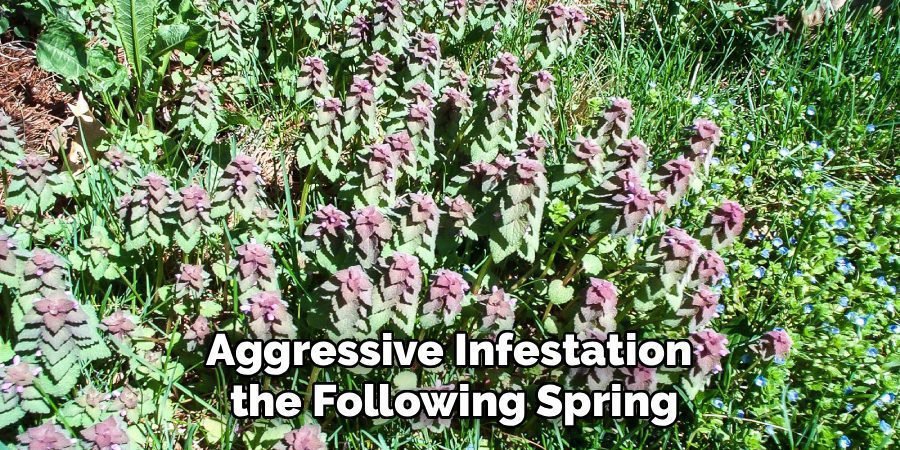
Purple dead nettle (Lamium purpureum) might seem harmless, but its aggressive growth can pose a real threat to your garden’s ecosystem. As a winter annual, it germinates in the fall, grows through the cooler months, and then flowers profusely in early spring. Each plant can produce hundreds of seeds, leading to a rapid and widespread infestation year after year. This dense growth outcompetes your turfgrass and other low-growing plants for essential resources like sunlight, water, and nutrients.
By taking control of this weed early, you protect the investment you’ve made in your lawn and ornamental beds, ensuring they remain healthy and vibrant.
8 Step-by-Step Guide on How to Kill Purple Dead Nettle
Step 1: Positively Identify the Weed
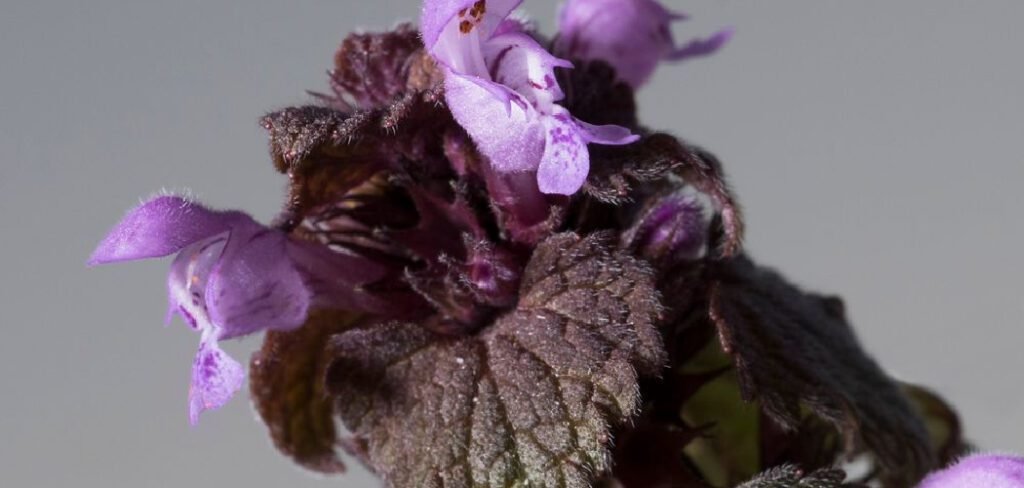
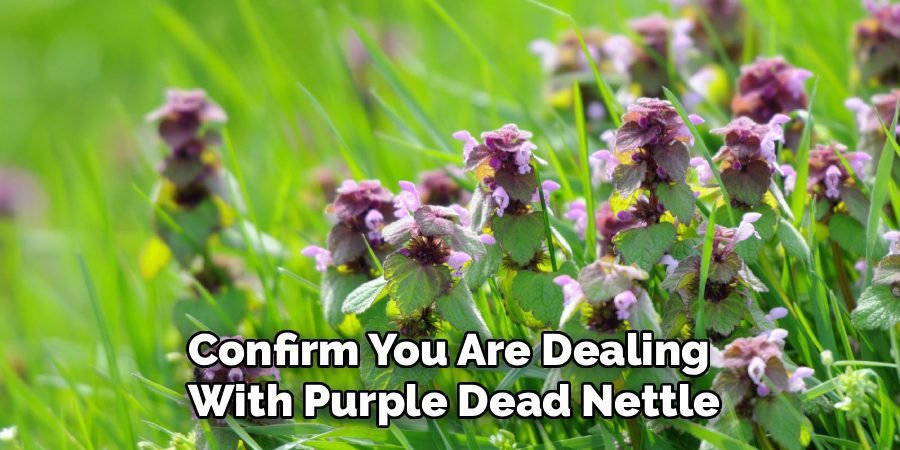
Before you begin any treatment, confirm you are dealing with purple dead nettle. Look for square stems, which are a classic sign of the mint family. The leaves are fuzzy, triangular or heart-shaped, and have scalloped edges. The most telling feature is the cluster of small, purplish leaves at the top of the plant, where tiny, tube-shaped pinkish-purple flowers bloom. This weed is often confused with henbit, but purple dead nettle’s upper leaves are more distinctly triangular and crowded, giving the top a pointed appearance.
Step 2: Choose the Right Time for Removal
Timing is critical for successfully controlling this weed. The best time to act is in the late fall or early winter when the new seedlings are just beginning to sprout. At this stage, the plants are small and weak, making them much easier to remove manually or treat with herbicides. The second-best window is in early spring, right before the plants begin to flower. Once they set seed, the problem multiplies exponentially for the following year. Tackling them before they bloom is a proactive strategy that saves you significant effort later.
Step 3: Start with Manual Removal
For smaller infestations, hand-pulling is a surprisingly effective and organic method. Make sure the soil is moist, as this will help the entire root system slide out more easily. Grasp the plant firmly at its base and pull straight up with a steady motion. A garden hoe or a specialized weeding tool can make this process faster, especially in larger patches. Rake the area afterward to collect any plant fragments left behind, as even small pieces can potentially re-root under the right conditions.
Step 4: Smother the Weeds with Mulch
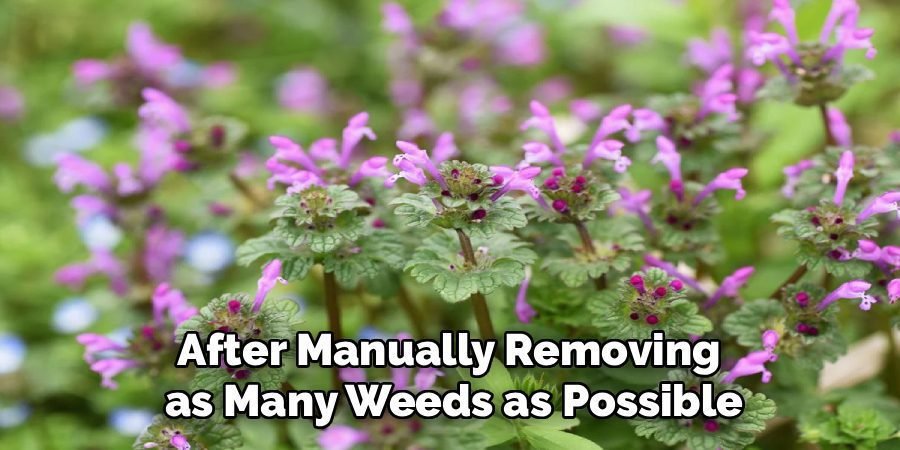
Smothering is an excellent, non-chemical approach for garden beds. After manually removing as many weeds as possible, apply a thick layer of organic mulch, such as wood chips, straw, or shredded leaves, at least two to three inches deep. This layer blocks sunlight from reaching any remaining seeds, preventing them from germinating. For an even more robust barrier, lay down cardboard or several sheets of newspaper on the soil before adding your mulch. This method not only suppresses weeds but also enriches the soil as it decomposes.
Step 5: Employ a Post-Emergent Herbicide
For widespread infestations in your lawn where manual pulling isn’t practical, a post-emergent broadleaf herbicide is your next line of defense. These products are designed to target weeds without harming your grass. Look for herbicides containing active ingredients like 2,4-D, MCPP, or dicamba. Always read the product label carefully to ensure it is safe for your specific type of turfgrass and follow all application instructions, including safety precautions like wearing gloves and eye protection. Apply on a calm, non-windy day to prevent drift.
Step 6: How to Kill Purple Dead Nettle with Natural Sprays
If you prefer to avoid synthetic chemicals, you can create a homemade herbicidal spray. A solution of horticultural vinegar (which has a higher acetic acid concentration than household vinegar) can be effective. Mix it with a small amount of dish soap, which acts as a surfactant to help the vinegar cling to the weed’s fuzzy leaves. Be aware that this type of spray is non-selective, meaning it will damage any plant it touches, including your grass. It is best used for spot-treating weeds in sidewalk cracks or on driveways.
Step 7: Use a Pre-Emergent Herbicide for Future Prevention
Prevention is the ultimate goal. To stop purple dead nettle from ever taking hold, apply a pre-emergent herbicide in late summer or early fall. This is when the seeds from the previous season begin to germinate. Pre-emergents work by creating a chemical barrier in the soil that inhibits seed germination. Products containing isoxaben or dithiopyr are known to be effective against this weed. Proper timing is essential, as these products will not work on weeds that have already sprouted.
Step 8: Focus on Promoting a Healthy Lawn
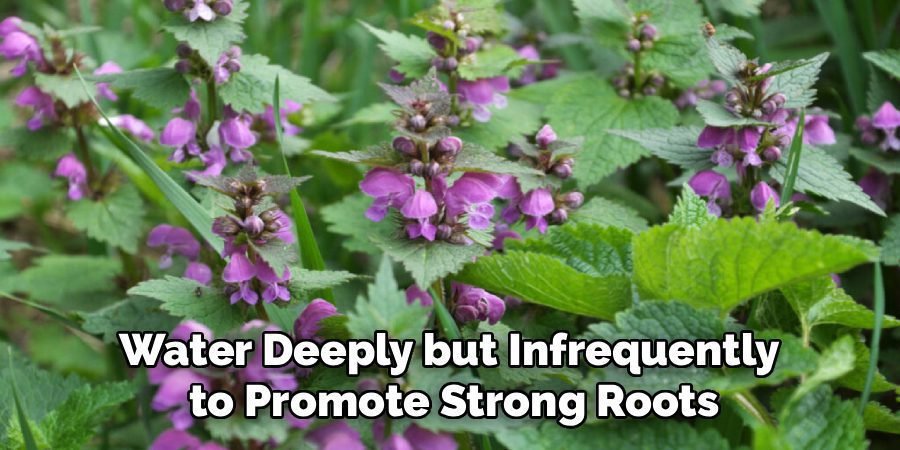
A thick, healthy lawn is the best natural defense against any weed. Dense turfgrass leaves no room for purple dead nettle to establish itself. You can encourage a robust lawn by mowing high, which allows the grass to develop a deeper root system and shade out weed seedlings. Fertilize according to your lawn’s needs and water deeply but infrequently to promote strong roots. Overseeding your lawn in the fall can also help fill in any bare spots, creating a lush carpet that weeds cannot penetrate.
Use Mulch to Suppress Weeds
Applying mulch in garden beds and around landscaping is an effective way to suppress purple dead nettle and other weed growth. Mulch creates a barrier that blocks sunlight, preventing weed seeds from germinating. Organic mulches, such as wood chips, straw, or shredded bark, also help retain soil moisture and improve soil structure over time. Be sure to apply mulch in a layer 2-3 inches thick, taking care to keep it a few inches away from the bases of plants to prevent rot or pests. Regularly replenish the mulch as it breaks down to maintain an effective weed barrier.
Frequently Asked Questions (FAQ)
Is Purple Dead Nettle Safe to Touch?
Yes, purple dead nettle is completely safe to touch. Unlike its look-alike, the stinging nettle, it does not have stinging hairs and will not cause any skin irritation or rash. The stems and leaves are covered in fine, soft hairs that give it a fuzzy texture. You can confidently hand-pull this weed from your garden without needing to wear gloves, though using them is always a good practice for general gardening hygiene to keep your hands clean and protected from soil-borne bacteria.
Will Purple Dead Nettle Die on Its Own?
As a winter annual, an individual purple dead nettle plant will complete its life cycle and die off naturally as temperatures rise in late spring and early summer. However, the problem is that it leaves behind a massive number of seeds before it dies. These seeds will germinate in the fall, ensuring a much larger and more aggressive infestation the following spring. Therefore, relying on it to die on its own is not an effective long-term control strategy.
Does Regular Mowing Get Rid of Purple Dead Nettle?
Regular mowing can help manage the appearance of purple dead nettle, but it will not eliminate it. This weed has a low-growing habit and can set flowers and seeds below the height of a typical mower blade. While mowing may cut off the taller flowering stems and temporarily slow seed production, the plant itself will survive and continue to spread. To truly get rid of it, you need to either pull it out by the roots or use an appropriate herbicide treatment.
What Is the Difference Between Purple Dead Nettle and Henbit?
Purple dead nettle and henbit are often confused because they look similar and grow in the same conditions. The easiest way to tell them apart is by looking at the leaves and stems. Purple dead nettle has triangular or heart-shaped leaves that attach directly to the main stem. In contrast, henbit has rounded, scalloped leaves that clasp or wrap around the square stem. Additionally, the upper leaves of purple dead nettle are distinctly purple or reddish and crowded together.
Can You Eat Purple Dead Nettle?
Yes, purple dead nettle is an edible plant. Its young leaves, stems, and flowers can be eaten raw in salads or cooked like spinach. It has a slightly earthy, floral, and grassy flavor. Many foragers prize it as an early spring green that is rich in vitamin C and antioxidants. However, you should only consume plants that you can positively identify and that have not been treated with any herbicides or pesticides. Never forage from roadsides or lawns where chemical treatments are common.
Conclusion
Controlling purple dead nettle is a manageable task when you approach it with the right knowledge and timing. From simple hand-pulling and smothering with mulch to the strategic use of pre- and post-emergent herbicides, you have a variety of effective tools at your disposal. The key to long-term success lies in combining removal methods with practices that promote a thick, healthy lawn, which naturally crowds out opportunistic weeds. By following these steps on how to kill purple dead nettle, you can reclaim your garden and enjoy a beautiful, weed-free space.

About Ravuk Barg
B.Sc. Horticulture Science | Certified Master Gardener
Ravuk Barg has spent more than a decade with his hands in the soil and his head full of questions about why some gardens thrive while others struggle. What started as a single raised bed of tomatoes and basil in a modest backyard has grown into a deep, working knowledge of everything from seed germination and soil amendment to companion planting and seasonal pruning.
Over the years, Ravuk has gardened through drought summers, waterlogged springs, and pest invasions that would make most gardeners hang up their trowels for good. Those hard seasons, he’ll tell you, taught him more than any perfect growing year ever could. He writes from that earned experience—covering vegetable growing, ornamental planting, houseplant care, composting, and garden design with equal confidence and curiosity.
Philosophy & Approach
Ravuk’s approach to gardening is rooted in practicality. He favors organic methods not out of dogma, but because they work long-term—resulting in healthier soil, fewer inputs, and stronger plants. He has a particular fondness for heirloom vegetable varieties (the kind with proper flavor), unruly cottage-style flower beds, and the stubborn houseplants that everyone else gave up on.
The Mission: Give readers the honest, experience-backed advice that helps them actually succeed in their gardens—not just the ideal version, but the real one; weeds, failures, and all.
Education & Credentials
-
B.Sc. in Horticulture Science
-
Greenfield Agricultural University
-
Focus: Plant Physiology, Soil Ecology, and Sustainable Crop Production
-
-
Master Gardener Certification
-
Cooperative Extension Service
-
Focus: 200+ hours of hands-on practical training and community garden work
-
Continuing Education
-
Organic Pest Management
-
Native Plant Landscaping
-
Sustainable Crop Production