

A pristine, debris-free lawn is the goal of many homeowners, but achieving it with a rake can be a back-breaking and time-consuming task. This is where a lawn sweeper comes in as a powerful ally for yard maintenance. Whether you’re dealing with fallen leaves in autumn, grass clippings after mowing, or scattered twigs and pine needles, a sweeper can make cleanup fast and efficient. This guide will walk you through the simple process of how to use a lawn sweeper, transforming a tedious chore into a satisfying activity.
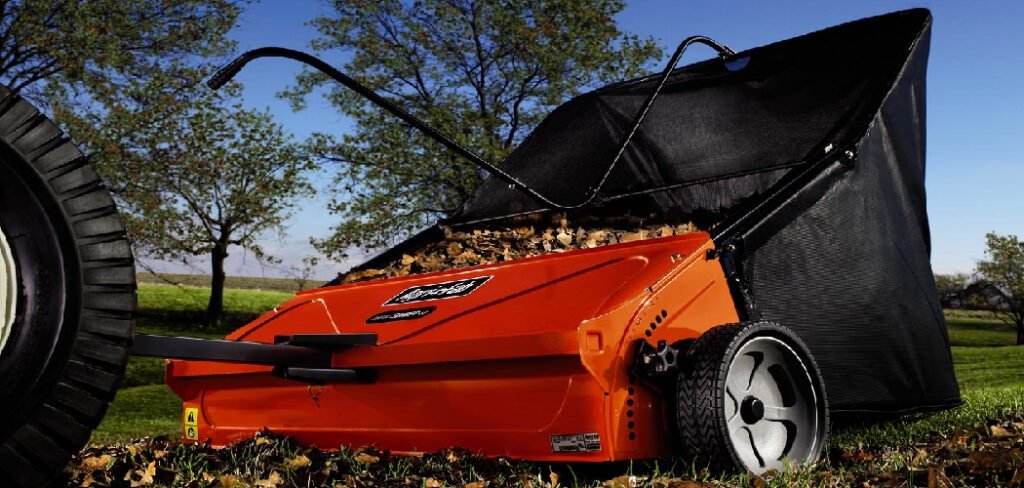
You’ll learn everything from assembly and height adjustment to proper operation and maintenance, ensuring your lawn stays beautiful year-round.
Why a Clean Lawn Matters
Maintaining a clean lawn goes far beyond simple aesthetics. A thick layer of leaves or grass clippings can smother your turf, blocking essential sunlight and air from reaching the soil. This creates a damp environment that invites pests and promotes fungal diseases like snow mold, which can damage or kill your grass. Removing debris allows your lawn to breathe, absorb nutrients, and receive the light it needs for healthy growth. Using a lawn sweeper not only saves you significant time and physical effort compared to raking but also contributes directly to the long-term health and vitality of your yard.
8 Step-by-Step Guide on How to Use a Lawn Sweeper
Step 1: Read the Manual and Assemble Your Sweeper
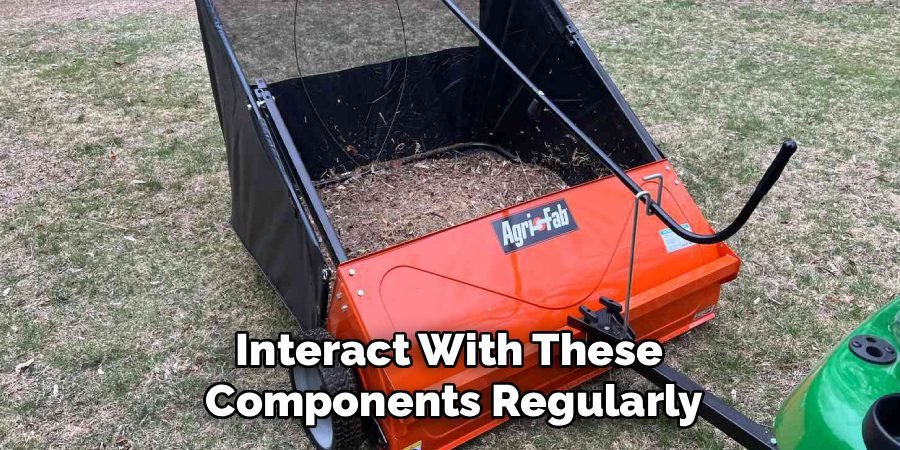
Before you begin, take the time to thoroughly read the manufacturer’s manual. This document contains critical information specific to your model, including assembly instructions, safety warnings, and maintenance schedules. Proper assembly is the foundation of effective operation. Carefully follow each step, ensuring all bolts are tightened and parts are correctly aligned. An improperly assembled sweeper can perform poorly or even become a safety hazard. Pay close attention to how the hopper bag attaches and how the height adjustment mechanism works, as you will interact with these components regularly.
Step 2: Clear the Lawn of Large Obstacles
A lawn sweeper is designed to pick up leaves, grass, and small twigs, but it is not built to handle large objects. Before you start, walk through your yard and remove any items that could damage the sweeper’s brushes or internal components. Look for large branches, rocks, garden tools, children’s toys, or sprinkler heads. Clearing these obstacles first will prevent costly repairs and ensure the sweeper can operate smoothly and efficiently across the entire lawn, allowing it to focus on collecting the finer debris it was designed for.
Step 3: Adjust the Sweeper Height
Proper brush height is the most important factor for effective sweeping. If the brushes are too high, they will miss debris. If they are too low, they will dig into the turf, potentially damaging your grass and causing unnecessary wear on the brushes. To set the right height, place the sweeper on a flat surface like a driveway. Adjust the brushes so they are approximately half an inch into the grass blades. For push sweepers, this is usually done with a single lever, while tow-behind models may have a crank or pin-lock system.
Step 4: Make a Test Pass
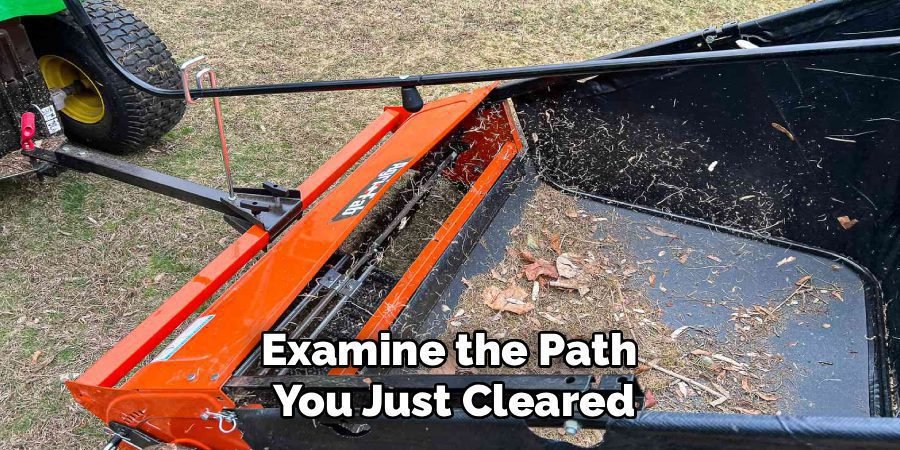
Once you have set the initial height, it’s time to test it. Push or tow the sweeper for about 10 feet on the lawn and then stop to check the results. Examine the path you just cleared. Is it free of debris? If leaves and clippings are still left behind, the brushes are likely too high. If you see disturbed soil or torn grass, they are too low. This test run helps you fine-tune the settings before you commit to sweeping the entire yard, ensuring you get the best possible results from your efforts.
Step 5: Plan Your Sweeping Pattern
To work most efficiently, plan your path before you begin. A systematic approach prevents you from missing spots or going over the same area multiple times. A great method is to work in long, slightly overlapping rows, similar to how you would mow your lawn. Start along one edge of the yard and move back and forth in parallel lines. This pattern ensures complete coverage and makes the process quick and organized. For tow-behind models, be mindful of your turning radius to avoid jackknifing the sweeper.
Step 6: How to Use a Lawn Sweeper for Consistent Pickup
Maintain a steady, consistent pace as you operate the sweeper. For a push model, a brisk walking speed is ideal. For a tow-behind unit, maintain a tractor speed of around 3 to 5 miles per hour. Moving too slowly may reduce the brushes’ rotational speed and effectiveness, while going too fast can cause the wheels to bounce, lifting the brushes off the ground and leaving debris behind. Consistency is key to getting the brushes to spin at an optimal rate for maximum pickup and a clean finish on every pass.
Step 7: Empty the Hopper Bag as Needed
Keep a close eye on the hopper bag as it fills up. An overfilled bag becomes heavy and can drag on the ground, making the sweeper harder to maneuver and potentially causing debris to spill out. Most models have a simple dump rope or handle that allows you to empty the contents without leaving your tractor seat or stopping for too long. Find a designated spot for your debris pile or empty the contents directly into compost bags. Emptying the hopper regularly keeps the machine light and operating at peak performance.
Step 8: How to Use a Lawn Sweeper on Hills and Slopes
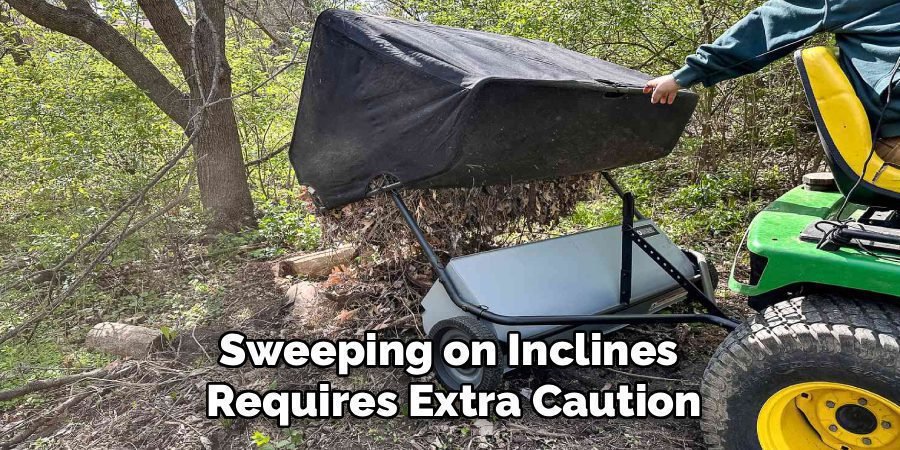
Sweeping on inclines requires extra caution. Whenever possible, operate the sweeper up and down the slope rather than across it. Driving sideways on a steep hill increases the risk of the tractor or sweeper tipping over, which can be extremely dangerous. Going up and down provides greater stability and control. For push sweepers, you will need to exert more effort going uphill, so be prepared for a workout. Take your time, maintain a firm grip, and prioritize safety when working on any uneven terrain.
Clean and Store Your Lawn Sweeper
After you finish cleaning your yard, take a few minutes to clean the sweeper itself. Remove any lingering grass, leaves, or mud from the brushes, wheels, and housing. This prevents debris from hardening and interfering with the machine’s operation next time. It also helps prevent rust and corrosion. Once clean, store the sweeper in a dry, sheltered location like a garage or shed. Proper cleaning and storage will significantly extend the life of your equipment, ensuring it is ready to go whenever you need it.
Frequently Asked Questions (FAQ)
Can a Lawn Sweeper Pick Up Wet Leaves?
While a lawn sweeper can pick up damp leaves, its performance is significantly better on dry debris. Wet leaves are heavy, tend to mat together, and can clog the brushes and hopper. If you must sweep wet leaves, you may need to set the brushes lower and make multiple passes over the area. It is generally more effective to wait for the lawn to dry out before sweeping for the best and most efficient results.
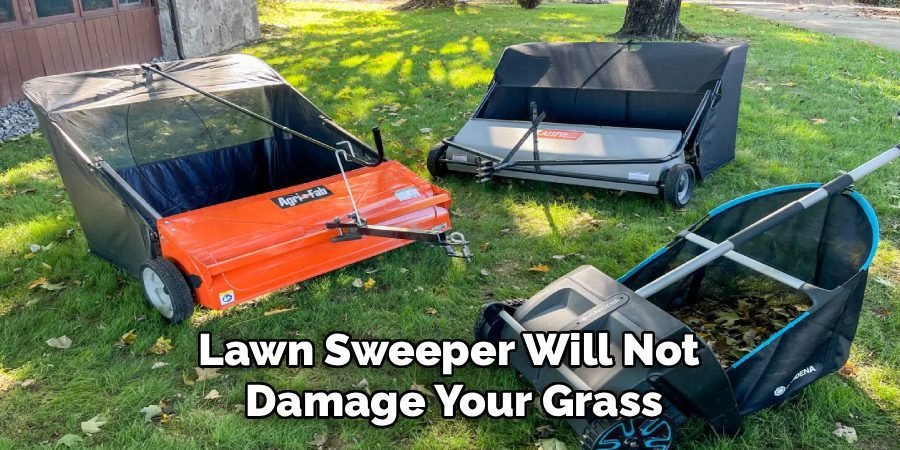
Will a Lawn Sweeper Damage My Grass?
When used correctly, a lawn sweeper will not damage your grass. The key is to set the brush height properly. The brushes should only skim the top of the grass, not dig into the soil. If the height is too low, the stiff bristles can tear at the turf. Always perform a test pass on a small area to ensure the height is correct before proceeding with the entire lawn.
How Is a Lawn Sweeper Different From a Bagger?
A lawn sweeper and a lawn mower bagger both collect debris, but they function differently. A bagger attaches directly to a mower deck and uses the mower’s vacuum suction to collect grass clippings as you cut. A sweeper is a separate tool, either pushed or towed, that uses rotating brushes to flick debris into a hopper. Sweepers typically have a much larger capacity and are more effective at picking up leaves, pine needles, and other yard waste beyond just grass.
Can I Use a Lawn Sweeper on Pavement?
Yes, a lawn sweeper is very effective for cleaning driveways, patios, and sidewalks. Since these are hard, flat surfaces, you should adjust the brushes to their highest setting to avoid unnecessary wear. The sweeper will easily pick up leaves, grass clippings, and other light debris from paved areas, making it a versatile tool for cleaning your entire property, not just the lawn.
What Maintenance Does a Lawn Sweeper Require?
Lawn sweepers require minimal maintenance. The most important tasks are cleaning the unit after each use and checking for worn or damaged parts. Regularly inspect the brushes for wear and replace them when they become too short to function effectively. You should also lubricate the wheel bearings once per season according to the manufacturer’s instructions to ensure the wheels spin freely and smoothly.
Conclusion
Mastering how to use a lawn sweeper is a straightforward process that pays huge dividends in time saved and effort spared. By following these steps—from proper assembly and height adjustment to planning your pattern and performing regular maintenance—you can keep your yard looking its best with ease. A lawn sweeper is more than just a tool for tidying up; it’s an investment in the health and beauty of your lawn. Say goodbye to the aches and pains of raking and hello to a faster, more effective way to handle yard cleanup.

About Ravuk Barg
B.Sc. Horticulture Science | Certified Master Gardener
Ravuk Barg has spent more than a decade with his hands in the soil and his head full of questions about why some gardens thrive while others struggle. What started as a single raised bed of tomatoes and basil in a modest backyard has grown into a deep, working knowledge of everything from seed germination and soil amendment to companion planting and seasonal pruning.
Over the years, Ravuk has gardened through drought summers, waterlogged springs, and pest invasions that would make most gardeners hang up their trowels for good. Those hard seasons, he’ll tell you, taught him more than any perfect growing year ever could. He writes from that earned experience—covering vegetable growing, ornamental planting, houseplant care, composting, and garden design with equal confidence and curiosity.
Philosophy & Approach
Ravuk’s approach to gardening is rooted in practicality. He favors organic methods not out of dogma, but because they work long-term—resulting in healthier soil, fewer inputs, and stronger plants. He has a particular fondness for heirloom vegetable varieties (the kind with proper flavor), unruly cottage-style flower beds, and the stubborn houseplants that everyone else gave up on.
The Mission: Give readers the honest, experience-backed advice that helps them actually succeed in their gardens—not just the ideal version, but the real one; weeds, failures, and all.
Education & Credentials
-
B.Sc. in Horticulture Science
-
Greenfield Agricultural University
-
Focus: Plant Physiology, Soil Ecology, and Sustainable Crop Production
-
-
Master Gardener Certification
-
Cooperative Extension Service
-
Focus: 200+ hours of hands-on practical training and community garden work
-
Continuing Education
-
Organic Pest Management
-
Native Plant Landscaping
-
Sustainable Crop Production