

Living in an area with strong winds doesn’t mean you have to give up on your dream of year-round gardening. The key is to understand the forces your structure will face and to plan accordingly. A standard greenhouse might not survive the first major storm, leaving your precious plants exposed and your investment wasted. This guide will walk you through the essential considerations for how to build a greenhouse for high winds.
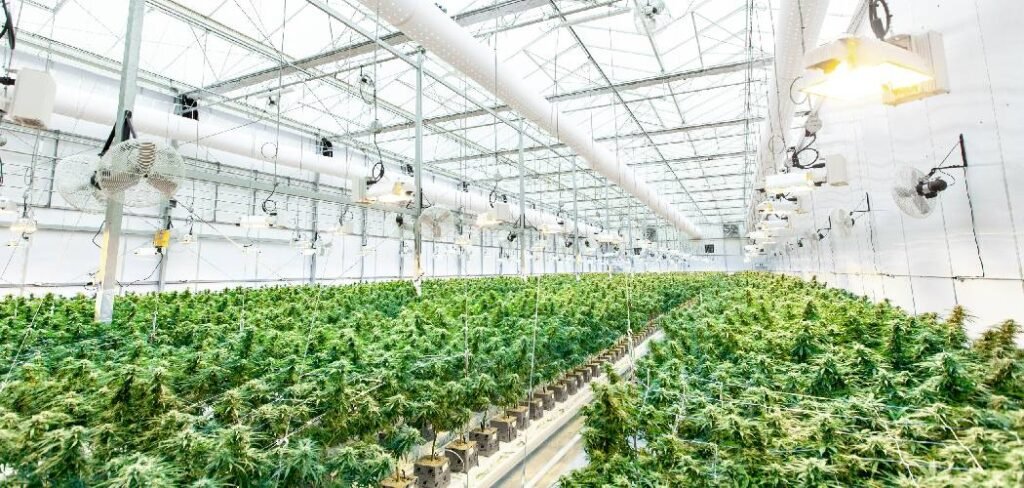
By focusing on a robust frame, appropriate glazing, and a secure foundation, you can create a durable sanctuary that protects your plants from the harshest weather, allowing your garden to thrive no matter what the wind blows your way.
Why You Need to Build a Wind-Resistant Greenhouse
High winds can wreak havoc on traditional greenhouses, causing structural damage that leads to costly repairs or even complete replacement. By constructing a wind-resistant greenhouse, you ensure that your plants remain protected in severe weather, safeguarding your investment and efforts.
Additionally, robust greenhouses maintain a stable microclimate, preventing wind from disrupting temperature regulation and humidity levels essential for plant growth. Whether you live in a region prone to hurricanes, strong gusts, or unpredictable weather, a wind-resistant structure provides peace of mind and the confidence to garden year-round without worrying about the elements.
6 Step-by-Step Guide on How to Build a Greenhouse for High Winds
Step 1: Choose a Sheltered Location
The first step in creating a wind-resistant greenhouse is selecting the right spot. While you need ample sunlight, you also need to minimize wind exposure. Look for a location that offers a natural windbreak, such as a sturdy fence, a line of dense trees, or the side of your house or another outbuilding. Placing your structure in the lee of such an object can significantly reduce the force of the wind hitting it. Avoid open, exposed hilltops or wide-open fields where wind speeds are at their highest.
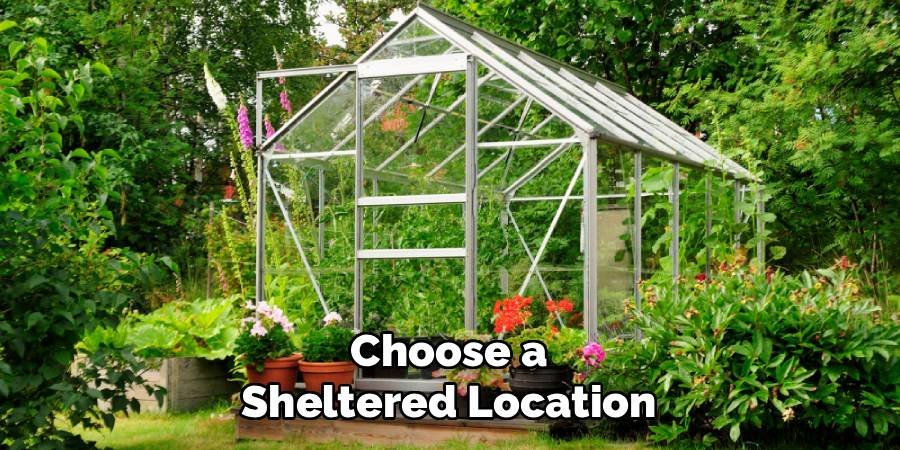
Also, consider the prevailing wind direction in your area. Orient the narrowest end of your greenhouse to face this direction to present a smaller profile and reduce the overall wind load on the structure. This strategic placement is your first line of defense.
Step 2: Build a Strong Foundation and Anchoring System
A greenhouse is only as strong as its foundation. For areas with high winds, a simple on-ground placement is not enough. A concrete slab or perimeter footing provides the most secure base. This heavy foundation anchors the entire structure to the ground, preventing it from lifting or shifting during powerful gusts. If a full concrete base isn’t feasible, you must install a robust anchoring system.
Use deep-set ground anchors, such as helical anchors or concrete piers, driven well below the frost line. The frame of your greenhouse must be securely fastened to this foundation using heavy-duty brackets and bolts. A proper anchoring system is non-negotiable for ensuring your greenhouse remains stable and intact through severe weather.
Step 3: Select a Sturdy Frame Material
The skeleton of your greenhouse, its frame, is critical for resisting wind. While aluminum is a common choice for standard kits due to its low cost and light weight, it may not be the best option for high-wind areas unless it is a heavy-gauge, reinforced design. Steel offers superior strength and durability, making it an excellent choice for a sturdy frame. A galvanized or powder-coated steel frame will resist rust and stand up to immense pressure.

Another fantastic option is a heavy timber or wood frame, which combines strength with natural flexibility. Whichever material you choose, ensure the design incorporates extra bracing, especially at the corners and along the roofline, to create a rigid structure that won’t twist or buckle under stress.
Step 4: Use Wind-Resistant Glazing
The panels that cover your greenhouse, known as glazing, take a direct beating from the wind. Traditional glass panes can shatter into dangerous shards, making them a poor choice for windy climates. A much safer and more resilient option is polycarbonate. Twin-wall or multi-wall polycarbonate panels are incredibly strong, impact-resistant, and lightweight. They can flex slightly under wind load without breaking.
When installing these panels, it’s crucial to use the correct hardware. Use gasketed screws and oversized washers to securely fasten the polycarbonate panels to the sturdy frame, ensuring there are no gaps where wind can get underneath and lift them off. This secure installation is just as important as the material itself for creating a truly wind-proof covering.
Step 5: Opt for a Rounded or Geodesic Shape
The shape of your greenhouse plays a significant role in how it handles wind. A traditional rectangular, A-frame design presents flat, vertical walls that act like sails, catching the full force of the wind. A more aerodynamic shape is far better. Geodesic domes are exceptionally strong and wind-resistant because their triangular framework distributes stress evenly across the entire structure, and their curved surface allows wind to flow over and around them with less resistance.
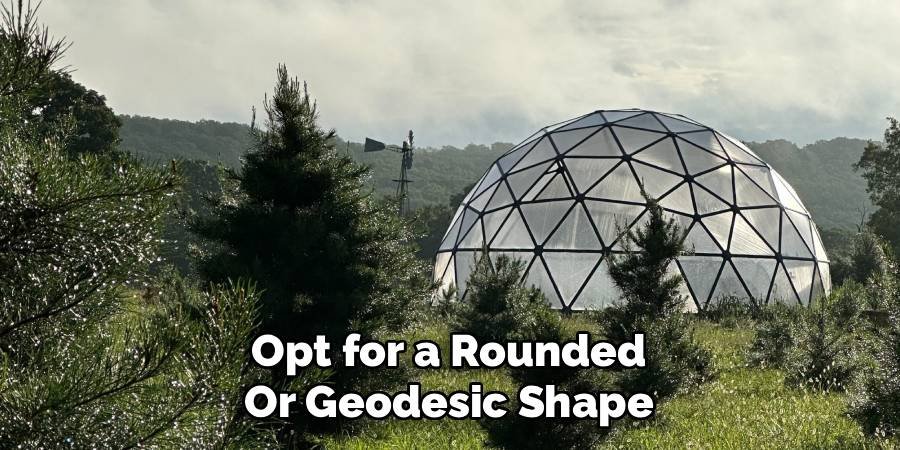
Similarly, a barn-style or hoop house with a rounded roof profile deflects wind effectively. While these designs might be more complex to build, their inherent structural integrity and aerodynamic advantage make them the superior choice for any gardener building in a windy region.
Step 6: Reinforce All Joints and Openings
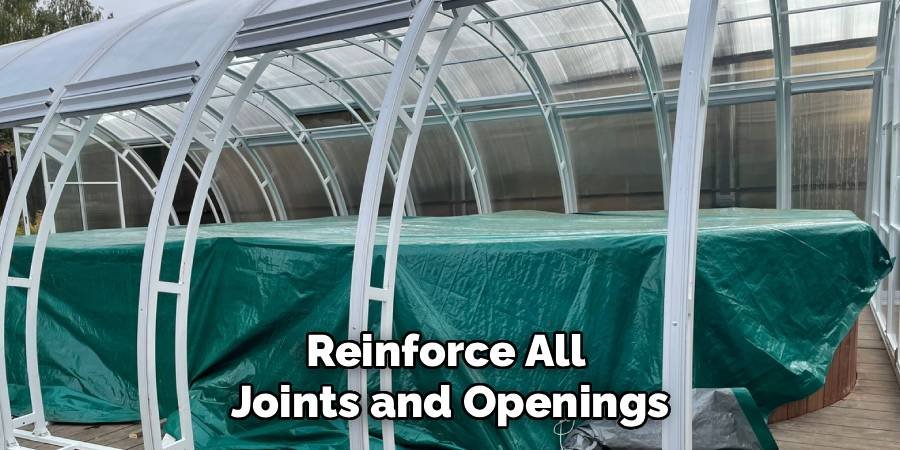
Even with a sturdy frame and strong glazing, a greenhouse’s weak points are often its joints, doors, and vents. These areas must be meticulously reinforced. Use heavy-duty connectors, bolts, and structural screws at every joint instead of standard nails or weak fasteners. Ensure your door is a solid, well-fitted unit with at least three hinges and a strong latching mechanism that can be securely locked during storms.
Vents should also be equipped with high-quality automatic openers that hold them firmly shut against suction or have reliable manual locks. Applying weather stripping and sealant around all openings not only improves insulation but also prevents wind from whistling through gaps, which can create pressure differentials and place strain on the structure.
Maintenance
Regular maintenance is essential to ensure the durability and effectiveness of your storm protection measures. Inspect doors, windows, and vents periodically for any signs of wear, such as cracks, rust, or loose fittings, and address these issues promptly. Replace worn weather stripping and reapply sealant as needed to maintain a tight seal against wind and moisture. Test locks and latches frequently to confirm they are functioning properly and can withstand high pressure. Keeping your protective features in top condition will help safeguard your structure during severe weather events and extend their lifespan.
Frequently Asked Questions
What is the best shape for a greenhouse in a windy area?
The best shapes are those that are aerodynamic. Geodesic domes are excellent because their curved surface allows wind to flow around them, and their triangular framework distributes stress evenly. Hoop houses or structures with a barn-style rounded roof are also highly effective at deflecting wind rather than blocking it. These shapes present less of a flat surface for the wind to push against, significantly reducing the overall wind load and making them much more stable than traditional rectangular designs in stormy conditions.
Are polycarbonate panels better than glass for high winds?
Yes, polycarbonate panels are significantly better than glass for high-wind environments. Polycarbonate is virtually unbreakable and can flex under pressure without shattering, which is a major safety advantage. Glass, on the other hand, is brittle and can be easily broken by windborne debris or strong gusts. Twin-wall or multi-wall polycarbonate also provides better insulation than single-pane glass. When properly installed with gasketed screws, these panels create a durable, resilient, and weather-tight covering for your greenhouse.
How deep should my greenhouse foundation be?
For maximum stability in high-wind areas, your foundation should extend below the local frost line. This prevents the ground from heaving due to freezing and thawing, which could destabilize your structure. A concrete slab or perimeter footing poured to this depth is ideal. If using ground anchors or posts, they should also be driven or set in concrete below the frost line. This deep anchoring provides the necessary resistance to prevent the entire greenhouse from lifting or shifting during severe wind events.
How can I reinforce an existing greenhouse for wind?
To reinforce an existing greenhouse, start by adding internal cross-bracing to the frame, especially at the corners and along the length of the roof. Check and tighten all fasteners, replacing any weak screws or bolts with heavy-duty hardware. You can also add external guy wires or straps anchored to the ground to provide extra stability. If you have glass panels, consider applying a security film to prevent shattering or replacing them with polycarbonate in the most exposed areas.
What kind of door is best for a wind-resistant greenhouse?
The best door is a sturdy, well-sealed one that functions more like an exterior door on a house than a flimsy screen door. It should be made from a solid material and mounted with at least three heavy-duty hinges to prevent warping. A strong latching mechanism, like a deadbolt or a robust barrel bolt, is crucial to keep it from blowing open during a storm. Ensure the door frame is securely integrated into the main greenhouse frame and that weather stripping is used to create a tight seal.
Conclusion
Following this guide on how to build a greenhouse for high winds will empower you to create a durable and productive growing space. By carefully selecting your location, building a solid foundation, and choosing the right materials, you can construct a fortress for your plants that will stand strong against the elements. A wind-resistant greenhouse is not about over-engineering; it’s about smart design choices that work with nature, not against it.
Key takeaways include:
- Prioritizing an aerodynamic shape like a geodesic dome.
- Investing in a strong steel or heavy timber frame with extra bracing.
- Using impact-resistant polycarbonate panels instead of glass.
- Anchoring the entire structure to a deep, secure foundation.
By taking these steps, you can move past the worry of storm damage and focus on the joy of gardening. Your efforts will be rewarded with a resilient sanctuary that provides fresh produce and beautiful blooms for years to come.

About Ravuk Barg
B.Sc. Horticulture Science | Certified Master Gardener
Ravuk Barg has spent more than a decade with his hands in the soil and his head full of questions about why some gardens thrive while others struggle. What started as a single raised bed of tomatoes and basil in a modest backyard has grown into a deep, working knowledge of everything from seed germination and soil amendment to companion planting and seasonal pruning.
Over the years, Ravuk has gardened through drought summers, waterlogged springs, and pest invasions that would make most gardeners hang up their trowels for good. Those hard seasons, he’ll tell you, taught him more than any perfect growing year ever could. He writes from that earned experience—covering vegetable growing, ornamental planting, houseplant care, composting, and garden design with equal confidence and curiosity.
Philosophy & Approach
Ravuk’s approach to gardening is rooted in practicality. He favors organic methods not out of dogma, but because they work long-term—resulting in healthier soil, fewer inputs, and stronger plants. He has a particular fondness for heirloom vegetable varieties (the kind with proper flavor), unruly cottage-style flower beds, and the stubborn houseplants that everyone else gave up on.
The Mission: Give readers the honest, experience-backed advice that helps them actually succeed in their gardens—not just the ideal version, but the real one; weeds, failures, and all.
Education & Credentials
-
B.Sc. in Horticulture Science
-
Greenfield Agricultural University
-
Focus: Plant Physiology, Soil Ecology, and Sustainable Crop Production
-
-
Master Gardener Certification
-
Cooperative Extension Service
-
Focus: 200+ hours of hands-on practical training and community garden work
-
Continuing Education
-
Organic Pest Management
-
Native Plant Landscaping
-
Sustainable Crop Production