

A garden hose is an essential tool for any gardener, but not all hoses are created equal. One of the most important, yet often overlooked, characteristics is its diameter. Knowing your hose’s size is crucial for ensuring proper water flow, pressure, and compatibility with nozzles, sprinklers, and other accessories.
A mismatched size can lead to frustrating leaks, reduced performance, or even damage to your watering equipment. This guide will provide a straightforward approach to how to measure garden hose diameter, empowering you with the knowledge to make informed decisions for your garden. We’ll walk you through simple steps, explain why it matters, and answer common questions to help you master this simple but vital task.
Why Hose Diameter Is So Important
Understanding your garden hose’s diameter is about more than just fitting a new nozzle. It directly impacts your watering efficiency. The diameter determines the volume of water that can pass through the hose at any given time. A larger diameter hose, like a 3/4-inch model, delivers more water per minute than a standard 1/2-inch or 5/8-inch hose. This is especially important if you are running a sprinkler system over a large lawn or need to move a significant amount of water quickly. Conversely, a smaller diameter can increase water pressure, which might be beneficial for certain cleaning tasks. Getting the measurement right ensures you have the optimal tool for your specific gardening needs, saving you time, water, and effort.
8 Step-by-Step Guide on How to Measure Garden Hose Diameter
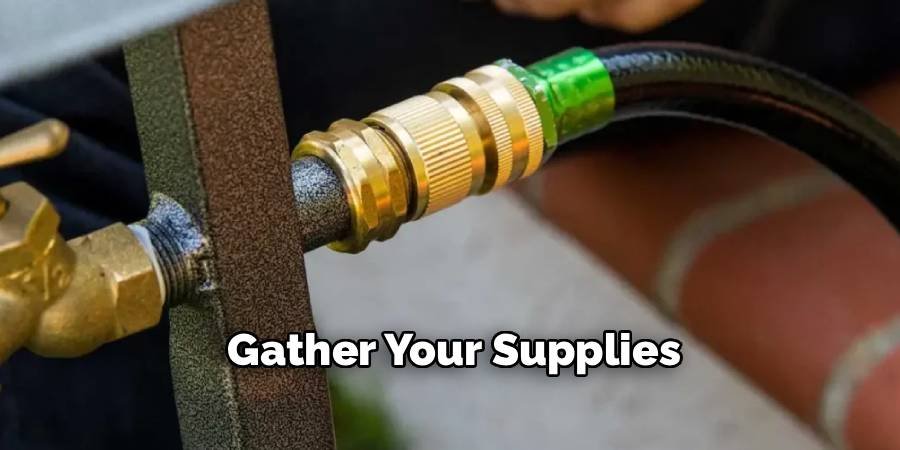
Step 1: Gather Your Supplies
Before you begin, gather the necessary items to ensure an accurate measurement. You will need your garden hose, a standard ruler or a tape measure, and a pen or pencil. While a flexible tailor’s tape measure can work for measuring circumference, a rigid ruler is often best for directly measuring the diameter of the fitting. Having these simple tools on hand will make the process quick and efficient. Ensure your workspace is well-lit so you can clearly see the measurement markings on your ruler and the details of the hose fitting.
Step 2: Locate the Male Fitting
Every garden hose has two ends: a female end, which connects to the spigot, and a male end, which connects to accessories like nozzles or sprinklers. For this task, you will focus on the male fitting. This is the end with the external threads. The internal diameter of this metal or plastic fitting is what determines the hose’s official size. Measuring the flexible, rubbery part of the hose itself can be inaccurate due to its pliability. The rigid, circular opening of the male fitting provides a consistent and reliable point for measurement.
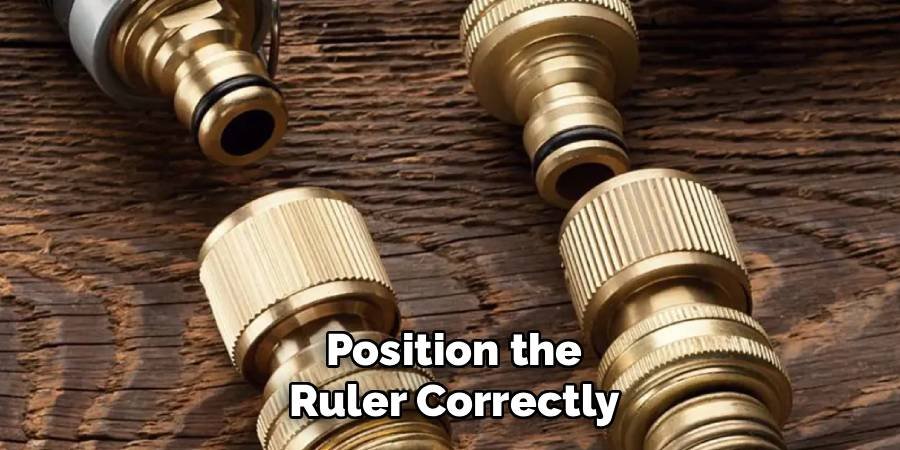
Step 3: Position the Ruler Correctly
Take your ruler or tape measure and place its edge across the opening of the male fitting. It’s crucial to measure the inside diameter, not the outside. Position the “0” mark of your ruler on one inner edge of the circular opening. You will be measuring the distance straight across to the opposite inner edge, passing directly over the center of the opening. Be careful not to measure from the outer edges of the metal or plastic threads, as this will give you an incorrect, larger measurement that doesn’t reflect the hose’s functional size.
Step 4: How to Measure Garden Hose Diameter for an Accurate Reading
With the ruler in place, look directly down at the measurement. Read the value on the ruler where it meets the opposite inner edge of the fitting. Garden hoses in the United States are typically sold in standard sizes: 1/2 inch, 5/8 inch, or 3/4 inch. Your measurement should align closely with one of these fractions. For example, if the distance is eight-sixteenths of an inch, that simplifies to 1/2 inch. Most household hoses are 5/8 inch, which you’ll see is just slightly larger than the 1/2-inch mark on your ruler.
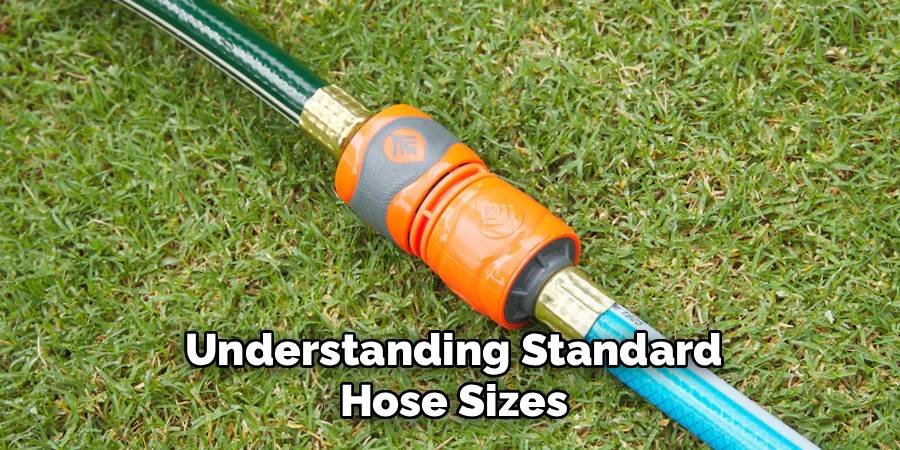
Step 5: Understanding Standard Hose Sizes
Once you have your measurement, it’s helpful to understand what it means. The most common size for residential use is the 5/8-inch hose, as it offers a good balance between water flow and manageable weight. The 1/2-inch hose is lighter and more flexible but delivers less water, making it suitable for small gardens, patios, or container plants. A 3/4-inch hose is considered a heavy-duty option, delivering the highest volume of water. This size is ideal for larger properties, professional use, or situations where you need to move a lot of water quickly.
Step 6: The Circumference Method (Alternative)
If you have a flexible tape measure, you can use an alternative method. Wrap the tape measure snugly around the outside of the male fitting to find its circumference. Once you have this number, you can calculate the diameter. The formula is Diameter = Circumference / π (pi, approximately 3.14). While this method is less direct and requires a small calculation, it can be a useful backup if you find it difficult to get a straight measurement across the small opening. This approach provides another way to confirm your results and ensure accuracy.
Step 7: How to Measure Garden Hose Diameter for a New Purchase
Now that you know your hose’s size, you can confidently buy compatible parts. When shopping for nozzles, wands, sprinklers, or quick-connect fittings, check the packaging for the size information. Most accessories are designed to be universal or will clearly state they are for 1/2-inch, 5/8-inch, or 3/4-inch hoses. Choosing the correctly sized accessory prevents leaks, ensures a secure connection, and guarantees that the tool will perform as intended. This simple knowledge removes the guesswork from your shopping and saves you from frustrating return trips to the store.
Step 8: Document Your Findings
It may seem simple, but it’s a good idea to note the diameter of your hose somewhere you can easily find it. You could write it on a piece of masking tape and wrap it around the hose near the spigot, or keep a note in your phone or a garden journal. This small step saves you from having to re-measure it every time you need a new part. It’s especially useful if you have multiple hoses of different sizes for different tasks around your property. Keeping a record makes future maintenance and purchases much simpler.
Frequently Asked Questions
What Is The Most Common Garden Hose Diameter?
The most common garden hose diameter for home use in North America is 5/8 inch. This size offers an excellent compromise between water flow (volume) and water pressure, making it versatile for a wide range of tasks like watering lawns, washing cars, and cleaning patios. While 1/2-inch hoses are lighter and 3/4-inch hoses deliver more water, the 5/8-inch model is the standard for most households due to its balanced performance and manageable weight.
Does Hose Diameter Affect Water Pressure?
Yes, hose diameter has a significant impact on water pressure. For a given flow rate from your spigot, a smaller diameter hose will generally produce higher water pressure at the nozzle. This is because the water is forced through a narrower opening, increasing its velocity. A larger diameter hose, like a 3/4-inch model, will have lower pressure but will deliver a greater volume of water. This is why a narrow hose is great for spraying tasks, while a wider hose is better for filling a pool or watering a large area quickly.
Can I Use A 5/8-Inch Nozzle On A 1/2-Inch Hose?
Generally, yes. Most modern hose nozzles and accessories are designed with a standardized thread size (called Garden Hose Thread or GHT in the U.S.) that is universal across 1/2-inch, 5/8-inch, and 3/4-inch hoses. The sizing refers to the internal diameter of the hose itself, not the connector threads. Therefore, a nozzle marketed for a 5/8-inch hose will almost always screw perfectly onto a 1/2-inch or 3/4-inch hose without any leaks at the connection point.
How Does Hose Length Affect Water Flow?
Hose length affects water flow due to friction loss. The longer the hose, the more friction the water encounters as it travels, which reduces both the flow rate and the water pressure at the end of the hose. For example, a 100-foot hose will have significantly lower output than a 25-foot hose of the same diameter, even when connected to the same spigot. It is best to use the shortest hose practical for your task to maximize water flow and pressure.
Are Metal And Plastic Fittings Measured The Same Way?
Yes, the measurement process is identical regardless of whether the hose fittings are made of metal (typically brass or aluminum) or plastic. You are always measuring the inside diameter of the male threaded end. Place your ruler across the center of the opening and measure from one inner wall to the opposite inner wall. The material of the fitting does not change the standard sizing (1/2-inch, 5/8-inch, etc.) that the measurement corresponds to.
Conclusion
Knowing your garden hose’s diameter is a fundamental piece of information for any gardener. It influences everything from water pressure and flow rate to compatibility with the accessories you rely on. By following the simple steps outlined above, you can easily and accurately identify your hose’s size using just a ruler. This knowledge empowers you to select the right equipment, prevent leaks, and make your watering tasks more efficient and effective. The next time you need a new nozzle or sprinkler, you can shop with confidence. We encourage you to try this simple measurement; learning how to measure garden hose diameter is a skill that will serve your garden well for years to come.

About Ravuk Barg
B.Sc. Horticulture Science | Certified Master Gardener
Ravuk Barg has spent more than a decade with his hands in the soil and his head full of questions about why some gardens thrive while others struggle. What started as a single raised bed of tomatoes and basil in a modest backyard has grown into a deep, working knowledge of everything from seed germination and soil amendment to companion planting and seasonal pruning.
Over the years, Ravuk has gardened through drought summers, waterlogged springs, and pest invasions that would make most gardeners hang up their trowels for good. Those hard seasons, he’ll tell you, taught him more than any perfect growing year ever could. He writes from that earned experience—covering vegetable growing, ornamental planting, houseplant care, composting, and garden design with equal confidence and curiosity.
Philosophy & Approach
Ravuk’s approach to gardening is rooted in practicality. He favors organic methods not out of dogma, but because they work long-term—resulting in healthier soil, fewer inputs, and stronger plants. He has a particular fondness for heirloom vegetable varieties (the kind with proper flavor), unruly cottage-style flower beds, and the stubborn houseplants that everyone else gave up on.
The Mission: Give readers the honest, experience-backed advice that helps them actually succeed in their gardens—not just the ideal version, but the real one; weeds, failures, and all.
Education & Credentials
-
B.Sc. in Horticulture Science
-
Greenfield Agricultural University
-
Focus: Plant Physiology, Soil Ecology, and Sustainable Crop Production
-
-
Master Gardener Certification
-
Cooperative Extension Service
-
Focus: 200+ hours of hands-on practical training and community garden work
-
Continuing Education
-
Organic Pest Management
-
Native Plant Landscaping
-
Sustainable Crop Production