

Watching a flock of Canada geese descend on your perfectly manicured lawn can be both fascinating and frustrating. While these majestic birds are beautiful to observe, they quickly transform your green oasis into a minefield of droppings and damaged grass. If you’re wondering how to keep geese off my lawn, you’re not alone in this common suburban struggle.
Geese are attracted to residential lawns for several reasons: the abundant short grass provides easy grazing, open spaces offer clear sightlines for predator detection, and nearby water sources make your property an ideal habitat. Understanding their behavior is the first step toward reclaiming your outdoor space.
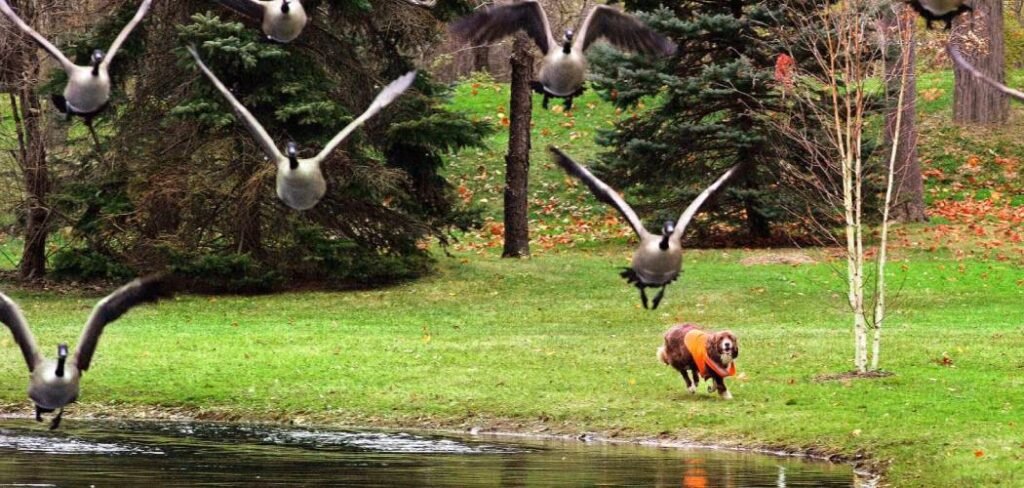
The good news? You don’t need to resort to harmful methods or expensive professional services. With the right combination of deterrent strategies, habitat modification, and persistence, you can successfully discourage geese from treating your lawn as their personal dining room and bathroom.
Why You Need to Take Action
Geese aren’t just unsightly visitors—they pose real problems for homeowners. A single goose produces up to two pounds of droppings daily, creating unsanitary conditions that can harbor harmful bacteria like E. coli and Salmonella.
Their constant grazing damages grass roots and creates bare patches that require expensive reseeding or resodding. Geese also become increasingly territorial during nesting season, potentially becoming aggressive toward children and pets.
Property values can suffer when homes are known for persistent goose problems. The longer you wait to address the issue, the more established the geese become in viewing your lawn as their territory, making removal significantly more challenging.
10 Step-by-Step Guide: How to Keep Geese Off My Lawn
Step 1: Remove Food Sources
The most effective long-term strategy begins with eliminating what attracts geese to your property in the first place. Stop feeding waterfowl anywhere on or near your property, and ask neighbors to do the same.
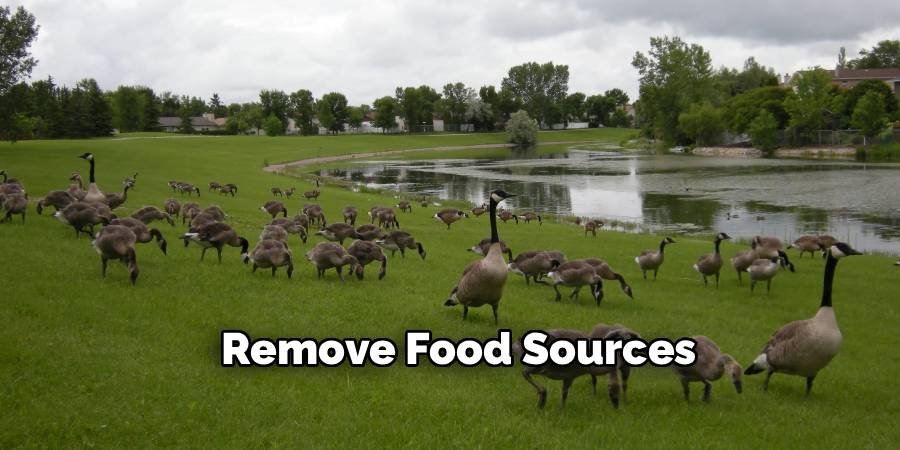
Clean up fallen fruit from trees, secure garbage can lids, and remove bird feeders that might spill seeds onto the ground. Even pet food left outside can attract geese, so bring dishes indoors after feeding times. Creating an environment where geese cannot find easy food sources forces them to look elsewhere for their daily meals.
Step 2: Install Physical Barriers
Temporary fencing creates an immediate deterrent while you implement other long-term solutions. Use lightweight mesh fencing or temporary snow fencing around vulnerable areas of your lawn.
For permanent solutions, consider installing low decorative fencing that maintains your landscape’s aesthetic while preventing geese access. Border collies and other herding breeds naturally deter geese, but physical barriers work 24/7 without requiring training or supervision. Ensure barriers are at least two feet high, as geese prefer walking onto lawns rather than flying over obstacles.
Step 3: Modify Your Landscape
Geese prefer open areas where they can spot predators easily. Plant dense shrubs, ornamental grasses, or flower beds along your lawn’s perimeter to create natural barriers that make geese uncomfortable.
Choose native plants that grow quickly and require minimal maintenance. Tall fescue grass varieties are less palatable to geese than traditional lawn grasses, making your entire yard less appealing. Consider replacing sections of lawn with ground cover, rock gardens, or mulched areas that provide no grazing opportunities.
Step 4: Use Motion-Activated Deterrents
Modern motion-activated sprinkler systems detect approaching geese and release sudden bursts of water, startling them away without causing harm. These devices work day and night, providing consistent protection when you’re not home.
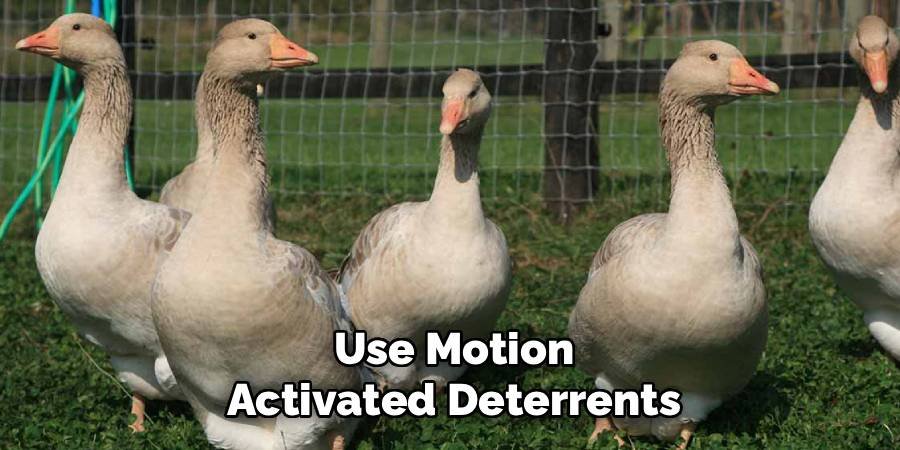
Position sprinklers to cover high-traffic areas where geese typically land and graze. The unpredictable nature of these deterrents prevents geese from becoming accustomed to the defense mechanism. Solar-powered options eliminate the need for electrical connections and reduce operating costs.
Step 5: Apply Visual Deterrents
Reflective tape, pinwheels, and metallic balloons create movement and light that make geese nervous about landing on your property. Rotate these deterrents regularly to prevent habituation.
Decoy predators like coyote or owl statues can be effective, but only when moved frequently to maintain the illusion of real threats. Some homeowners report success with eye-spot balloons that mimic the appearance of large predator eyes. Combine multiple visual deterrents for maximum effectiveness rather than relying on a single method.
Step 6: Implement Sound Deterrents
Ultrasonic devices emit high-frequency sounds that disturb geese without bothering most humans or pets. However, effectiveness varies, and some geese may adapt to these sounds over time.
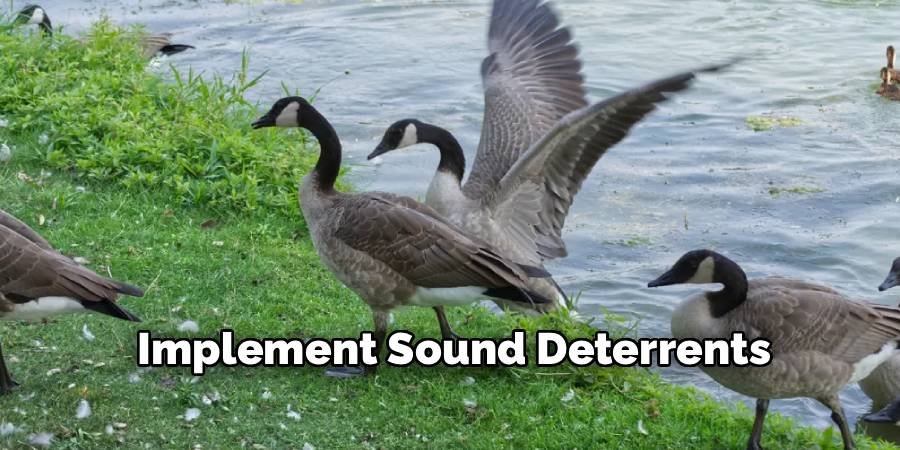
Wind chimes, particularly those made from metal, create unpredictable sounds that geese find unsettling. Recorded predator calls played intermittently can also discourage geese, but avoid continuous playback that might annoy neighbors. Timer-controlled devices ensure deterrents remain unpredictable and effective.
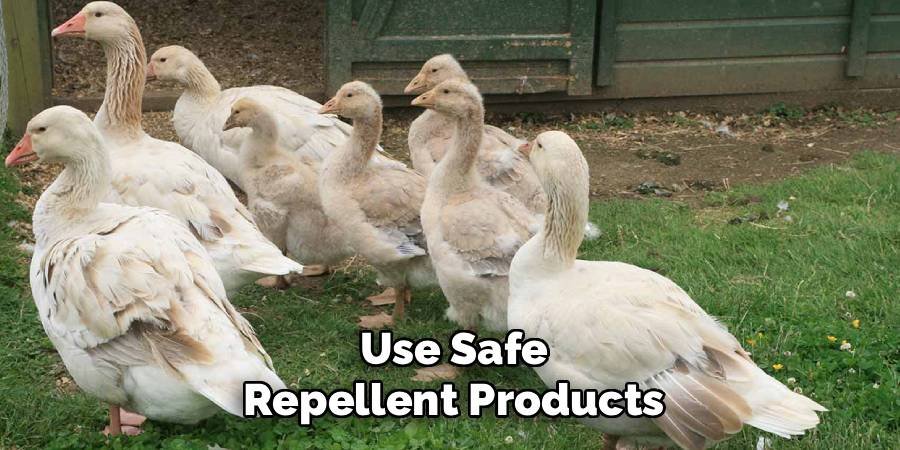
Step 7: Use Safe Repellent Products
Commercial goose repellents containing methyl anthranilate (grape extract) make grass taste unpleasant to geese without harming them or your lawn. Apply these products according to manufacturer directions, typically after mowing and watering.
Homemade solutions using cayenne pepper or garlic powder can provide temporary relief but require frequent reapplication after rain or irrigation. Always test repellents on a small lawn area first to ensure they won’t damage your grass. These products work best when combined with other deterrent methods.
Step 8: Maintain Consistent Pressure
Success requires persistence and consistency in applying multiple deterrent methods simultaneously. Geese are intelligent and adaptable, so varying your tactics prevents them from becoming accustomed to any single deterrent.
Document which methods work best for your specific situation and maintain those strategies long-term. Even after successfully deterring geese, continue monitoring your property for signs of their return. Seasonal migration patterns mean you may need to intensify efforts during spring and fall when geese are most active.
Step 9: Address Water Features
If your property includes ponds, fountains, or pools, these water sources significantly increase its appeal to geese. Install fountains or aerators in ponds to create movement that geese find less attractive for landing.
Cover pools when not in use, and consider adding floating decoys or deterrent devices to water features. Reducing easy water access forces geese to travel farther for drinks, making your property less convenient for extended visits. Proper pool chemical balance also makes water less appealing to wildlife.
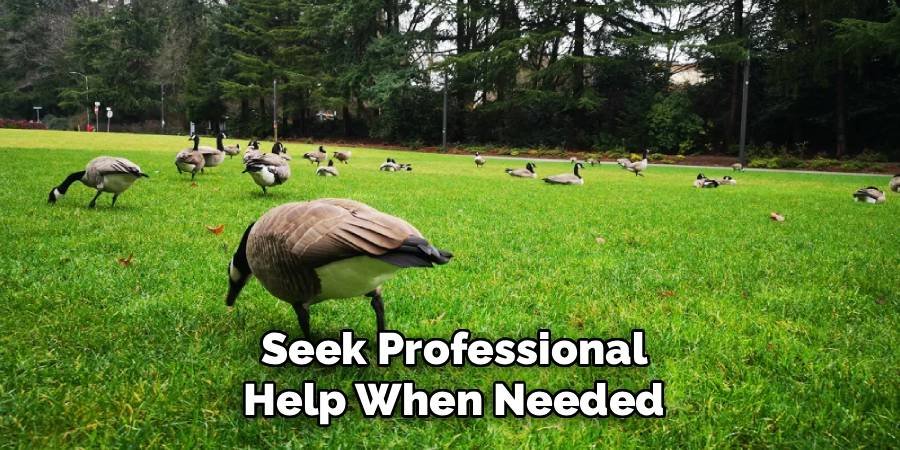
Step 10: Seek Professional Help When Needed
Some situations require professional wildlife management services, particularly when dealing with large, established flocks or protected species during nesting season. Licensed professionals have access to specialized equipment and techniques not available to homeowners.
Consider professional help if your efforts haven’t shown results after several weeks, or if geese have already begun nesting on your property. Many professionals offer humane harassment programs that combine multiple deterrent methods with expertise in goose behavior patterns. Document your own efforts before calling professionals to help them understand what approaches you’ve already tried.
Maintaining Your Goose-Free Lawn
Once you’ve successfully deterred geese, maintaining a goose-free environment requires ongoing vigilance. Continue rotating visual and audio deterrents to prevent habituation, and promptly address any new attractants like fallen fruit or standing water.
Regular lawn maintenance, including frequent mowing and proper fertilization, keeps grass healthy and less appealing to grazing waterfowl. Monitor your property during peak migration seasons when new flocks might discover your lawn.
Consider joining neighborhood efforts to address goose problems comprehensively, as individual success can be undermined by nearby properties that continue attracting geese.
Common Mistakes to Avoid
Many homeowners make the mistake of relying on a single deterrent method instead of implementing multiple strategies simultaneously. Geese are adaptable creatures that quickly learn to ignore static deterrents.
Inconsistent application of repellents or irregular maintenance of deterrent devices reduces their effectiveness significantly. Another common error is waiting until geese have established nesting sites before taking action, making removal much more difficult and potentially illegal during nesting season.
Feeding waterfowl, even with good intentions, creates long-term problems that extend far beyond your own property and affects entire neighborhoods.
FAQ: Frequently Asked Questions
Will Fake Owls Really Keep Geese Away?
Fake owls can work initially, but only if moved regularly to different locations. Stationary decoys become ineffective within days as geese recognize they pose no real threat.
Is It Legal to Remove Goose Eggs From My Property?
Canada geese are protected under federal law. Removing eggs or disturbing nests requires special permits from wildlife authorities, and timing restrictions apply during nesting season.
How Long Does It Take to See Results?
Most deterrent methods show initial results within one to two weeks of consistent application. Complete success may take several months, especially with established flocks.
Are Commercial Goose Repellents Safe for Pets?
Most commercial repellents using methyl anthranilate are safe for pets and humans when applied according to manufacturer directions. Always read labels carefully before application.
Do Geese Return to the Same Lawns Each Year?
Yes, geese have excellent memory and often return to previously successful feeding and nesting sites. Early intervention prevents establishment of annual visitation patterns.
Conclusion
Learning how to keep geese off my lawn requires patience, persistence, and a multi-faceted approach that addresses the root causes of their attraction to your property. By combining habitat modification, physical deterrents, and consistent maintenance, you can successfully reclaim your outdoor space without harming these magnificent birds.
Remember that success comes from implementing multiple strategies simultaneously rather than relying on any single solution. Start with removing food sources and installing basic deterrents, then gradually add more sophisticated methods as needed.
The investment in time and resources pays dividends in restored lawn beauty, reduced health risks, and increased property value. Most importantly, early intervention prevents geese from establishing your lawn as a regular feeding ground, making long-term success much more achievable.
Stay consistent with your chosen methods, be patient with the process, and don’t hesitate to seek professional help when needed. Your dedication to creating an unwelcoming environment for geese will ultimately result in a beautiful, droppings-free lawn that you can enjoy throughout the year.

About Ravuk Barg
B.Sc. Horticulture Science | Certified Master Gardener
Ravuk Barg has spent more than a decade with his hands in the soil and his head full of questions about why some gardens thrive while others struggle. What started as a single raised bed of tomatoes and basil in a modest backyard has grown into a deep, working knowledge of everything from seed germination and soil amendment to companion planting and seasonal pruning.
Over the years, Ravuk has gardened through drought summers, waterlogged springs, and pest invasions that would make most gardeners hang up their trowels for good. Those hard seasons, he’ll tell you, taught him more than any perfect growing year ever could. He writes from that earned experience—covering vegetable growing, ornamental planting, houseplant care, composting, and garden design with equal confidence and curiosity.
Philosophy & Approach
Ravuk’s approach to gardening is rooted in practicality. He favors organic methods not out of dogma, but because they work long-term—resulting in healthier soil, fewer inputs, and stronger plants. He has a particular fondness for heirloom vegetable varieties (the kind with proper flavor), unruly cottage-style flower beds, and the stubborn houseplants that everyone else gave up on.
The Mission: Give readers the honest, experience-backed advice that helps them actually succeed in their gardens—not just the ideal version, but the real one; weeds, failures, and all.
Education & Credentials
-
B.Sc. in Horticulture Science
-
Greenfield Agricultural University
-
Focus: Plant Physiology, Soil Ecology, and Sustainable Crop Production
-
-
Master Gardener Certification
-
Cooperative Extension Service
-
Focus: 200+ hours of hands-on practical training and community garden work
-
Continuing Education
-
Organic Pest Management
-
Native Plant Landscaping
-
Sustainable Crop Production